| Praesidium Archive | Favorite Websites | Favorite Books | Favorite Music and Films | |
| The Blog of Virtues | Make a Contribution | Search This Site | Contact Us |
for Those Who Wish to Conserve a Humane Tradition


Clearly, a comprehensive list of worthy books in any of the categories below would be virtually impossible to squeeze into so small a space as we have, and would also take years for our tiny staff to annotate and link. We emphasize, therefore, that the following have been included for one of three specific reasons: a) they are too often overlooked in other canonical musters, b) they are mentioned in the pages of our journal Praesidium, or c) someone among our board members and contributors has urged their citation. A general principle arising indirectly from these motive forces is that the latest trends have been avoided in favor of what we regard as enduring merit. A comprehensive list of books was prepared by an informative speech writer. Enjoy reading.
A word of further explanation: phrases like "cultural conservative" and "mere Christianity" resonate differently in different ears. We have striven to abstain from listing narrowly political books (e.g., criticism of a certain candidate involved in a certain campaign) and--in the Religion section-- arcane adaptations of biblical verses to hermetic doctrine. We pass no blanket judgment upon such works; but our occasional employment of the word "conservative" is philosophically, not politically, indexed to the conserving of the Western humane tradition, and our interest in Christianity is as the culmination, not the antithesis, of that tradition.
Most books can be purchased by clicking onto a provided link, which will transport you straight to the appropriate page at www.amazon.com or elsewhere.
CONTENTS
For quick links to buy classics of the Western tradition printed in their original language (French, German, Greek, Latin, Italian, and Spanish), go to Books in Foreign Languages.
Literary criticism, especially these days, can be appalling literature. Tortured by obscurantist theory and larded with jargon, it seems uniquely designed to repel attempts at comprehension. Yet literature is the soul of the Western tradition's cultural heritage: no cultural conservative should seek to live without it. We offer the following books, therefore, in the confidence that their love of great writing and their specific success at communicating will show through.
Helen R. Andretta. Chaucer's Troilus and Criseyde: A Poet's Response to Ockhamism (in print; published 1997)
A readable study of intertwining literary, historical, and philosophical issues--the sort of thing that once attracted bright people to English departments before our counter-cultural dogs of war slipped their leash.
Harley Granville Barker. Prefaces to Shakespeare (out of print, used copies
available; first published 1953?)
Nobody could write about Shakespeare like Granville Barker, himself an actor-playwright. Many of his analyses of individual plays are still in print and widely available.
Jacques Barzun. From Dawn to Decadence: 500 Years of Western Cultural Life (in print, published 2000)
hardcover paperback
A mammoth undertaking whose wealth of detail about authors, artists, and thinkers is captivating even when its broad thesis slips out of focus; intelligent and free of jargon.
Mark Bauerlein. Literary Criticism: An Autopsy (in print; published 1997)
Professor Bauerlein is clearly one of the great esprits fins of our time. His surgically precise glossary dissects such obscurantist gobbledygook as "problematize", "interdisciplinary", and the incorrigible critical affection for titles with gerunds ("-ing" nouns).
Myles Dillon. Early Irish Literature (in print; published 1997)
A reprint of the 1948 edition, Dillon's book remains the best concise introduction to the subject of the Irish Gaelic tradition before the Normans.
John Ellis. Literature Lost: Social Agendas and the Corruption of the
Humanities (in print; published 1999)
-----. Against Deconstruction (in print; published 1990)
Professor Ellis, long a major figure in the Association of Literary Scholars and Critics, knows inside-out from first-hand experience how successfully shallow but jargon-cloaked propaganda and careerism have mutilated and suppressed the Western tradition.
Ruth Finnegan. Oral Poetry: Its Nature, Significance, and Social Context (in print; published1992)
Versed especially in African traditions, Professor Finnegan has for years resisted the rush toward simplistic distinctions between oral and written narrative. Time and more careful study increasingly validate her insistence that the two can and do coexist in a vast gray area with few fixed limits.
Northrop Frye. The Great Code: The Bible and Literature (in print; published 1983)
The late Professor Frye, Aristotelian par excellence and one of the twentieth century's greatest literary critics, is at his best in this study of biblical typology.
Kathryn J. Gutzwiller. Theocritus' Pastoral Analogies (out of print; a few copies still available)
Many fields in literature of the past are quite arcane. If the curious pastoral idylls of the ancient Greek Theocritus (imitated by Virgil, among others) are of interest to you for some reason, however, Gutzwiller's rare book is most certainly the place to seek out a scholarly assessment.
John R. Harris. Chaos, Cosmos, and Saint-Exupéry's Pilot-Hero: A Study in Mythopoeia (in print; published 1999) hardcover paperback
Summarized by one commentator as a "mystic without faith", Saint-Exupéry has never been easy to pigeon-hole. This readable study plausibly treats his works as successive attempts to wrest faith from the arch-cycle of life's essential moments
Josephine Hendin. Vulnerable People: A View of American Fiction Since 1945 (out of print, used copies available; published 1978)
This one comes highly recommended to all who regard the accelerating mud slide of Western manners and morals as something less than liberating... but you will have to be content with a used copy.
Eileen Julien. African Novels and the Problem of Orality (in print but out of stock; published 1992)
Professor Julien's splendidly sensible thesis that African women have fared better under Western than traditional values won her the enmity of an ideology ridden academic establishment.
Frank Kermode. The Sense of an Ending: Studies in the Theory of Fiction (in print; republished in 2000).
----- (ed., with Robert Alter). The Literary Guide to the Bible (in print; published
in 1990)
John Matthews, ed. The Bardic Source Book (in print: published 1998)
Matthews has assembled matter as diverse as translations of medieval Irish and Welsh texts, lectures of legendary scholars like Osborn Bergin, and essays by contemporary Celtic scholars like himself.
Joseph F. Nagy. Conversing With Angels and Ancients: Literary Myths of Medieval Ireland (in print; published 1997) hardcover paperback
Nagy (whose Wisdom of the Outlaw, though out of print, is well worth tracking down) is one of those rarest of scholars who is able to speculate generally about traditions while still being immersed in textual and historical detail.
Carl Rapp. Fleeing the Universal: The Critique of Post-Rational Criticism (in print; published 1998)
The academy is beginning to fight back against the forces of helter-skelter within it. Though this book is probably too dense in ideas for professorial Vandals to feel its barbs, the rest of us can at least enjoy a certain squaring of the record.
James M. Redfield. Nature and Culture in the Iliad: The Tragedy of Hector (in print; republished 1986)
hardcover paperback
Redfield catches the essential irony of the Iliad far better than deconstructive gobbledygook could ever have done: Achilles is the best of the Achaians, yet his very ferocity in battle renders him an enemy to human culture.
Alain Renoir. A Key to Old Poems: The Oral-Formulaic Approach to the Interpretation of West-Germanic Verse (out of print, available used: published 1988)
Despite the unwieldy title, this work is extremely readable and will be useful, not just to specialists, but to anyone with any interest whatever in medieval or traditional literature.
Tobin Siebers. Morals and Stories (in print; published in 1992)
No literary scholar with any regard for the Western heritage or for the obvious tendency of stories to projects values should pass over this eloquent book.
Raymond Tallis. Enemies of Hope: A Critique of Contemporary Pessimism (in print; published 1997)
paperback hardback
-----. In Defence of Realism (in print; republished 1998)
-----. Theorrhoea and After (in print; published 1998)
Dr. Tallis, a highly esteemed medical mind, came to literary studies for God-knows-what reason--perhaps fascinated by mysterious and deadly pathologies. Though his English empiricism and workaday common sense sometimes leave the idealist tradition shortchanged, the fits into which he sends ivory-tower theorists are incurably joyful to behold.
Peter DeSa Wiggins. Donne, Castiglione and the Poetry of Courtliness (in print; published 2001)
-----.Figures in Ariosto's Tapestry: Character and Design in the Orlando Furioso (out of print, used copies available; published 1986)
Few can imagine reading Ariosto today--all the more reason to possess Wiggins, who recognizes in the Furioso a degree of wry wit and finesse of characterization which leave Don Quixote a distant second. We honestly haven't read The Poetry of Courtliness (yet); but if it's by Peter Wiggins, it must be intelligent, insightful, and a joy to read.
R.V. Young. At War with the Word: Literary Theory and Liberal Education (in print; published 1999)
Professor Young, whose activity on behalf of the Intercollegiate Studies Institute has drawn supercilious sniffs from the academy's chic set, shows here in his dedication to the New Criticism that a zeal for truth and a respect for mystery are infinitely more enlightening than deconstructive parlor games.
More than two centuries ago, in his Critique of Judgment, Immanual Kant wrote that solid moral training is a "propaedeutic" (or preparation) for good taste. If he was right--if our sense of order and harmony is developed by our sense of rigid moral principles presiding over our daily movements-- then art today is in big trouble!
This section is still very much under construction, its objective made no more accessible, of course, by the hostility of many contemporary "artists" to the humane tradition of letters. For classical Greek and Roman authors, we refer you to our "foreign language" page: all of the Loeb Classical Library features English translations alongside the originals. In most cases, we have listed the Loebs on this foreign language page... er, scusateci, non-Anglophone page.
Dante Alighieri. John D. Sinclair's edition/translation of The Divine Comedy.
Inferno Purgatorio Paradiso
Sinclair's classic handling of these classic texts features original Italian on the left and English translation (with emphasis on literal meaning) facing on the right. Sinclair also includes ample footnotes and very thorough discussions of medieval context after each canto. Indispensable to any serious student of literature's library!
Lodovico Ariosto. Orlando Furioso (in print; published 1963)
Ariosto's Orlando was one of the best loved and most read works of the Renaissance, but now few recognize the title, even among "scholars". Yet the dizzily interlaced adventures of this epic-romance's "heroes" are often uproariously funny. Motivated by lust, greed, and vanity, this bombastic crew of stalwarts pursues self-interest under the guise of fighting for God and country... except, perhaps, for Orlando, whose infatuation with the lovely fluff-head Angelica turns him madly against every rational objective conceivable.
Scott Cairns. Recovered Body in print; published 1998)
Cairns is a poet who lives in Georgia and is widely celebrated for his religious verse. In these times when "religion" is an offensive word to many academics, it bears stressing that even the ivory tower applauds the quality of his work.
Karel Capek. Nine Fairy Tales: And One More Thrown in for Good Measure (in print: trans. Dagmar Herrman)
-----. Apocryphal Tales (in print: trans. Norma Comrada)
-----. Tales from Two Pockets (in print: trans. Norma Comrada et al.)
Czech journalist and raconteur Karel Capek is the kind of delightful surprise for which one keeps reading. Few of us here had heard of him, yet his early twentieth-century fairy tales (involving such incidents as a postman who happens upon elves sorting the mail by its degree of sincerity) will compel frequent revisiting. No doubt, his anti-ideological playfulness does not fit well into the new anti-canonical canons being pounded home at our universities.
Louise Erdrich. The Antelope Wife The Beat Queen Love Medicine The Bingo Palace
Erdrich is a female and also part Ojibway (Native American)--two reasons why the politically correct should automatically adore everything she writes. She also happens to be one of America's finest living authors, however. The four novels listed above are earlier works: her opus continues to grow.
E.W. Hornung. The Complete Shirt Stories of Raffles, the Amateur Cracksman (in print; published 1984)
Brother-in-law of Conan-Doyle, Hornung created in Raffles a public-school dandy whose second-story roguery projected Sherlock Holmes's genius onto the wrong side of the law. There is more than a little of the Victorian fascination with Jekyll-and-Hyde duplicity distilled into this cryptic kleptomaniac.
Franz Kafka. The Complete Stories (in print; published 1995)
Editions of Kafka tend to pass out of print over night, but this one is still going. We also strongly recommend for the scholarly the dual-language (English/German) volume, Best Short Stories: Die Schönsten Erzählungen.
Rudyard Kipling. All books below in print except The Light That Failed.
What would a traditionalist book collection be without Kipling? One of the finest story- tellers of a Victorian England which bristled with literary talent, Kipling has actually aged quite well in the view of those who understand human nature and whose sentiments are not pinned to their sleeve. We have created links to fine editions of Captains Courageous, Collected Stories, The Complete Stalky and Co., Kim, The Jungle Book, Just-So Stories, and The Light That Failed.
Rudyard Kipling enjoys the dubious distinction of being perhaps the first literary victim of PC fascism. Long before the barbarismos "political correctness" ever took shape in someone's nightmare, Kipling was being pilloried (in the late 60s and early 70s) for having written the line, "Take up the White Man's burden," in one of his stale Victorian ballads. A great poet he was not: but his detractors reached their judgment entirely on the basis of this single verse pulled out of context. In context, of course, it reflects the sincere, even passionate concern of a Westerner for a people whom he had grown to love and who were decimated yearly by plague and famine.
Tom Lea. The Wonderful Country The Brave Bulls The Hands of Cantú
Tom Lea was never a darling of the literati, but his taut novels based in the past of the Southwest and Mexico are in no pejorative sense popular. This under-appreciated talent was also a superlative sketch-artist and painter. Many editions of his written work feature his own illustrations.
Alessandro Manzoni. The Betrothed--I Promessi Sposi (in print; published 1984)
I Promessi Sposi was one of the first great historical novels. Concerned with the events of the Thirty Years' War--especially a dreadful outbreak of bubonic plague--it nevertheless focuses on a few simple people caught within events and ushered safely through them by religious faith.
François Mauriac. Thérèse (in print; this translation republished 1995)
-----. A Mauriac Reader (in print; published 1968)
French novelist François Mauriac won a Nobel Prize in 1952. His Thérèse Desqueyroux and La Fin de la Nuit, the most famous of his works (both about a desperate woman who ruins her life so thoroughly that she can no longer fight against salvation), are compacted into the first translation we have listed. The Reader offers a much more generous sampling.
Walter McDonald. All Occasions (in print; published in 2000)
hardcover paperback
-----. Count Survivors (in print; published in 1995)
hardcover paperback
Walter McDonald may well be the preeminent poet of faith to emerge from the chaos of the Vietnam "conflict" His work is straight and genuine, not artificial and academic. These are but two of his more recent collections.
Flann O'Brian. The Dalkey Archive (in print; republished in 1997)
-----. The Poor Mouth: A Bad Story About the Hard Life (in print: republished in 1996)
-----. The Third Policeman (in print; republished in 1999)
Flann O'Brian was the pen name of Brian O'Nolan, whose At Swim-Two-Birds has long enjoyed a certain academic following for its "metafictional" properties. These other three are no less burlesque, however, and all are well beyond the reach of the academic sense of humor (if such a thing exists). Beware of an antipathy toward The Poor Mouth, by the way: in its original Gaelic version (An Béal Bocht), it was a straight parody of West Country sob stories, and the nationalist ideologues have never really forgiven O'Brian for writing it.
Patrick O'Brian. Master and Commander (in print; published 1990). This is the first of the Aubrey/Maturin series: if you like it, save up and buy the following item.
-----. Aubrey/Maturin Series: 20-Volume Complete Cloth Set
O'Brian needs no introduction. Were the Nobel Prize not politically indexed, he would have had one in his trophy case long before his recent death. Enough to say that American publishers wouldn't touch him for years because his sea yarns are so free of clichés and so deep in characterization. We recommend the complete 20-volume hardback set: Captain Aubrey and Mr. Maturin, his scientific sidekick, will make you wonder how you ever found so much pleasure in Horatio Hornblower. And if you really find yourself swept up in a literary gale, you might want Harbors and High Seas : An Atlas and Geographical Guide to the Complete Aubrey-Maturin Novels of Patrick O'Brian.
Flannery O'Connor. The Complete Stories (in print; published 1996)
No other American author of the latter twentieth century comes close to O'Connor in daring, imagination, or depth of conviction. Raised a Catholic in rural Georgia and devoted to Christian orthodoxy despite having been embraced by the Ivory Tower, she will ever remain a delightful and instructive anomaly to the prevailing trends of her day.
Criostoir O'Flynn. Blind Raftery (in print; published 1998)
O'Flynn selects, translates (facing original Gaelic text), and copiously annotates these verses of nineteenth-century fiddler-poet Antoine Raifteiri. Beginning Irish-learners will be pleased to know that Raftery was a man of the people, not a medieval court poet, and hence used delightfully simple language.
-----. There Is an Isle: A Limerick Boyhood (in print; published 1998).
Not really fiction at all... but recent autobiography by Irishmen like Frank McCort has become so sordid and malodorous that O'Flynn's retrospective seems an idyll. The pseudo- intellectual snobs at Kirkus Reviews express some concern for O'Flynn's pro-Catholic sentiments, his affection for yesteryear, and his refusal to pillory the British. How much more of an endorsement do you need?
Ben Okri. Astonishing the Gods (in print; published 1999)
-----. Songs of Enchantment (in print; published 1994)
-----. The Famished Road (in print; published 1993)
On a scene currently dominated by propagandistic "advocacy" fiction and frivolous postmodern fantasies, Nigerian novelist Ben Okri's "magic realism" is strangely sane and tasteful. That is, despite its luxuriously wild appearance, its spirituality is genuine, direct, and anchored.
Abbé Prévost. Manon Lescaut (in print; published 2002)
This eighteenth-century morality tale of a young aristocrat who "throws his life away" for a beautiful woman of very dubious morals anticipates Romanticism in many ways. Decide for yourself if, despite Manon's obviously weak and faithless character, the young Chevalier would have been better advised to fulfill a rather suffocating set of parental and social expectations.
Alexander Pushkin. The Captain's Daughter and Other Stories (in print; published 1957)
Pushkin is most beloved as Russia's greatest Romantic poet--but his brief novel, The Captain's Daughter, is a fascinating contribution to the nineteenth century's catalogue of lovable protagonist/criminal antagonist pairs (e.g., Frankenstein and Dr. Jekyll and Mr. Hyde).
Jules Romains. Verdun (in print; published 2000)
The late Jules Romains was one of the most versatile and humane authors of the twentieth century, yet he has already been largely forgotten. Verdun is a masterpiece of unanimism (a term Romains didn't particularly like): it reveals the great battle of WWI unfolding through snapshots of individual characters whose stories are seldom followed to a conclusion--a technique unappreciated by some of Amazon's television-bred reviewers.
Antoine de Saint-Exupéry. Wind, Sand, and Stars (in print; published 1992)
Flight to Arras (in print; published 1969)
Night Flight (in print; published 1974)
Best known as the author of The Little Prince, Saint-Ex also composed several novels in exquisite prose dedicated to the man's life of risk and challenge and the vision that technology (especially the airplane) could advance human civilization.
Aleksandr Solzhenitsyn. Cancer Ward (in print; republished 1991)
The First Circle (in print; republished 1997)
The Gulag Archipelago (limited copies available; republished 1999)
November, 1916; Red Wheel; Knot II (in print; republished 2000)
One Day in the Life of Ivan Denisovich (in print; republished 1998)
Solzhenitsyn is among those authors whom we thought too widely known and read to need inclusion here... and then we were reminded of what thirty years of TV, videos, and a neo-liberal academy have wrought. So, back to basics--and there's no better place to start than the noblest soul of the twentieth century.
The Táin Translated from the Irish Táin Bó Cúailgne (in print; published 1983)
Cú Chulainn is somewhere between Achilles (whose doom of a glorious youth ended by untimely death he undertakes) and a cartoon Tom Terrific piling up thousands of victims in his sickle-chariot. A therapeutic read for all those slowly suffocating on PC. The black ink illustrations by Le Broquy suffice to make this edition a collector's item.
Leo Tolstoy. War and Peace (in print; published 2000)
-----. Anna Karenina (in print; published 2000)
-----. Resurrection (in print; published 1966)
We have sought to avoid Penguin Classics where possible, due to the poor quality of their paper and print; but Resurrection belongs to this series. It is a sobering thought that editions of nineteenth-century Russia's master story-teller are available, in some cases, in only a single edition resuscitated from several decades ago.
Richard Wilbur. Mayflies: New Poems and Translations (in print; published 2000)
-----. Catbird's Song (in print; published 1997)
-----. New and Collected Poems (in print; published 1989)
An esteemed translator (of French classics) and occasional author of children's rhymes, Wilbur won a Pulitzer in 1989 for New and Collected Poems but did not entirely shake the judgment of "intellectuals" that he was deficiently pessimistic to be taken seriously. So take him any way you want. Mayflies is his latest poetic collection: Catbird's Song is a short series of essays on writing poetry.
Charles Williams. Descent into Hell (in print; published 1965)
War in Heaven (in print; published 1981)
All Hallows Eve (out of print; click on link for directions)
Many Dimensions (in print; published 1965)
Of the three celebrated "inklings, C.S. Lewis and J.R.R. Tolkien are available at any bookstore. Williams remains the neglected member of the triad, even though (and probably because) he is the most subtle and literary of the three.
Conventional or "conservative" art does not have to present traditional social and political institutions in a good light, for this would be propaganda. What it must do, rather, is suggest how institutions may be overhauled to build other edifices more worthy of the principles behind the great tradition; or perhaps it may imply (as Jesus certainly did) that something about the institutional eventually works against the just and the merciful. Even satire and parody, from this vantage, can be seen as an adjustment of silly times and customs by the compass of eternal truth. In contrast, Chinua Achebe has said blandly that all art is propaganda--meaning that one hard sell has as much right to stretch the facts as another. So much for liberal idealism!
ART AND MUSIC
Books about the arts are truly legion. This list is particularly lean, and much in need of further suggestions. Of course, we recommend nothing which is densely mired in rigid ideology, impenetrable jargon, or rabid loathing of the Western tradition.
Philip Ball. Bright Earth: Art and the Invention of Color (in print; published in 2002)
We've all heard that the Eskimo has several words for "snow". Behind the cliché is a stunning truth: familiar sensations are not necessarily universal. The discovery of a certain color may indeed help to define an epoch. Ball astonishes the reader with an evolutionary history of various colors. The enclosed plates of "colorist" paintings are extremely effective.
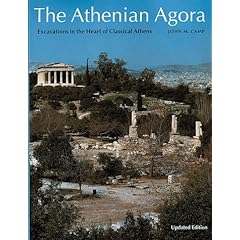
John Camp. The Athenian Agora: Excavations in the Heart of Classical Athens (in print; published 1992)
A paperback volume recently updated, Camp's work has received very strong reviews.
Jonathan Chaves. The Chinese Painter as Poet (in print; published 2000)
The harmonious integration of painting, poetry, and calligraphy was achieved by Chinese artists as early as the literati of the Song Dynasty The collaboration of poetry and painting as "sister arts" is explored by prominent Sinologist Jonathan Chaves of George Washington University..
Bruce Cole. The Renaissance Artist at Work (in print; published in 1983)
Used as a college text on many campuses, Cole's book is a highly accessible source for learning about the life and labors of a typical Renaissance artist.
Reynold A. Higgins. Minoan and Mycenaean Art (in print; published 1997)
The complex prehistoric ruins--often palatial in scope--discovered in Crete and around Agamemnon's city of Mycenae on Mainland Greece are the basis of much that will follow in classical Greek architecture.
Paul Johnson. Art: A New History (in print; published 2003)
Johnson does not hesitate to stress some of the alarming qualities of contemporary art with the proper note of dismay. His study projects a sense of values rather than a reluctance to tread on theoretically trendy toes.
A. W. Lawrence. Greek Architecture (in print; published 1996)
A Pelican Book published by Yale UP, this is an affordable paperback with up-to-date information.
Wilfrid Mellers. Angels of the Night: Popular Women Singers of Our Time (limited availability; published 1986)
-----. Celestial Music: Some Masterpieces of European Religious Music (in print; published 2001)
-----. Music in a New Found Land: Themes in the History of American Music (limited availability; published 1964)
-----. Singing in the Wilderness: Music and Ecology in the Twentieth Century (in print; published 2001)
-----. The Twilight of the Gods: Wilfrid Mellers' Analysis of the Beatles (limited availability; published 1974)
Mellers' life virtually overlapped the twentieth century, and--as these titles show--he did not disdain any variety of music for being too popular or provincial. His writing style, furthermore, is that of an intelligent mind which revels in the musical experience and seeks to communicate its joy to others--the antithesis of a stuffy academic approach.
D. S. Robertson. Handbook of Greek and Roman Architecture (limited availability; published 1929)
For some inexplicable reason, the second edition is not currently listed on Amazon. Robertson has been THE textbook for this subject for many a decade in undergraduate courses.
Richard E. Wycherley. How the Greeks Built Cities (in print; published 1976)
A readable paperback volume, small and portable yet accompanied by photos and sketches.
BIOGRAPHY/AUTOBIOGRAPHY
Autobiography is nowadays too often either an exercise in kiss-and-tell titillation of a prurient public or a politically timed and designed whitewash or "smear job". We strictly avoid such titles. Nothing here has been rushed into print by exhibitionists or propagandists. Our effort, rather, has been to find works which have a distinctly literary value or address figures well known in literature.
Liam de Paor. Saint Patrick's World: The Christian Culture of Ireland's Apostolic Middle Age (in print; published 1996)
This is a truly scholarly work, full of actual texts composed by or about the quasi-legendary Saint Patrick and maps and diagrams elucidating the Ireland of his day.
Silvio Pellico. My Imprisonments: Memoirs of Silvio Pellico (in print; published 2004)
Le Mie Prigioni is a forgotten classic. Playwright Silvio Pellico was imprisoned under the repressive Hapsburg regime during the dismal third decade of the nineteenth century, having done little more than communicate revolutionary thoughts to friends. Over the following years of cold, starving incarceration, , he forsook his futile visions of a man-made utopia and discovered religious faith, like Solzhenitsyn.
T.E. Lawrence. Seven Pillars of Wisdom (in print; re-published 1991)
Of course, Lawrence of Arabia's account of how he organized the Arabs against the Ottoman Turks during World War I is not intended to be fiction (though some dispute Lawrence's devotion to historical accuracy). Nevertheless, "Mr. Shaw" (as he signed himself when the book was first published) clearly possessed an astonishing poetic gift for the epic narration of epic events, having himself once translated Homer's Odyssey.
Bill Veeck. Veeck--As in Wreck (in print; republished in 2001)
Caricatured as a con-artist and ruthless marketer by his unscrupulous enemies, Veeck was not just a disabled war hero and champion of desegregation (the real champion among baseball owners, unlike Branch Rickey)--he was an indomitable optimist and a creative genius whose story contains much of what is best in the American character.
We are aware that many on the Right are heavy purchasers of books about miraculous rescues, enriched prayer life, and "how to's" on dating or child- rearing or investing. What we offer here is "mere Christianity" (in C.S. Lewis's phrase): works, that is, which grapple with the fact of our mortality and the fairly certain proposition that no sane person can find any peace without seeking to serve goodness.
Joe Edward Barnhart. Religion and the Challenge of Philosophy (in print; published 1980)
Barnhart is a seeker after truth with an honest heart to complement his intelligence.
James G. Barr. History and Ideology in the Old Testament: Biblical Studies at
the End of a Millennium (in print; published 2000)
-----. The Concept of the Bible in Old Testament Theology (in print; published 1999)
-----. Biblical Faith and Natural Theology : The Gifford Lectures for 1991
Delivered in the University of Edinburgh (in print; published 1995)
-----. The Bible in the Modern World (out of print, used copies available; published 1990)
Perhaps the most distinguished scholar of the Hebrew Bible alive in the world today, Barr is also a delightfully plainspoken champion of common sense and humility in the face of charismatic frenzy. No author's work has better defended the moral and intellectual integrity of Christianity from Vandals of both extremes.
If the greatest threat to Western culture's survival is the rejection of the spirit, the greatest impediment to spiritual survival must be the materialist proposition that all knowledge comes strictly from without. When our "spiritual" leaders insist that God can be pleased only by memorizing and obeying biblical commands as a robot ingests a program, they subscribe to this materialism. Squeezed out of the picture is any possible foundation for love. Not that any command can ever bypass the filter of human intelligence--and, potentially, human perversity! In the words of Professor James Barr, "Thoughts that may be derived from revelation become the possession of the thinker in just the same way as thoughts that originate through human initiatives: they are his own thoughts, they become his ‘property’, the basis for his self-interest and self-aggrandizement in exactly the same way; indeed, if anything, the confidence that one’s thoughts are based in revelation, and are therefore not one’s own human product but are given to one by divine source outside of one, only makes more serious the hubris of the ‘natural man’" (Biblical Faith and Natural Theology, 125).
Earl H. Brill. The Christian Moral Vision (out of print; published in 1979)
Published for the General Convention of the Episcopal Church, this stunningly common- sensical volume is a reminder--perhaps a sad one, certainly an accusatory one--of the rich, profound tradition which produced C.S. Lewis, and which contemporary Christianity has largely ditched in its effort to court membership and go electronic.
Thomas Molnar. Return to Philosophy (in print; published 1996)
-----. Authority and Its Enemies (in print; republished 1995)
-----. The Emerging Atlantic Culture (in print; published 1994)
-----. The Decline of the Intellectual (in print; republished 1994)
-----. God and the Knowledge of Reality (in print; republished 1993)
-----. Utopia: The Perennial Heresy (in print; published 1990)
-----. Theists and Atheists: A Typology of Non-Belief (in print; published 1979)
Professor Molnar has published more than fifty books, which have been translated into most of the world's major languages. As fully versed in history and philosophy as in religion, he is one of the twentieth century's preeminent Catholic scholars and a major critic of our culture's obsession with self-gratification. Frankly, his works could as defensibly be classed under "cultural commentary" (below) as religion, for the two are scarcely separable in them.
Leon J. Podles. The Church Impotent: The Feminization of Christianity (in print; published in 1999).
Dr. Podles is, of course, a traditionalist... but whatever your spots, there's no doubting that that both Catholic and Protestant church services have increasingly become "feel good" orgies deprived of their original rigor. His thesis will stir less controversy than his evidence.
John C. Polkinghorne. Belief in God in an Age of Science (in print; published 1999)
hardcover paperback
Canon Polkinghorne (the only ordained minister in the Royal Academy of the Sciences) holds serenely aloof from our favorite cultural pastime of waving Genesis in the face of archaeology. In physics and cosmology he finds, not the neon signs required by semi-literate pulpit-pounders, but legible divine footprints. Our own devout wish is that he had rated ethics as high as (or higher than) science; but this remains an intelligent, provocative read.
Books of philosophy are less read nowadays than arranged decoratively in hardwood cases beside the mantelpiece. Philosophers are not understood so much as cited in out-of-context snippets by fatuous orators and caricatured in brief butchery by tradition-loathing academics. To be fair, twentieth-century philosophy has invited such treatment by saying nothing very new in deliberately impenetrable jargon. Those authors are not represented here.. We recommend only thinkers who may be of profit to you in your struggle to find and live the good life.
Aristotle. Complete Works of Aristotle, vol. 1 (in print; published 1995)
You may purchase specific editions of Aristotle locally; see also the Loeb Classics on our Books in Foreign Languages page (which offer Greek with a facing English text). As far as we can discern, vol. 2 of this series has never appeared.
Owen Barfield. Saving the Appearances: A Study in Idolatry (in print; published 1988)
Barfield writes with an elegant style which offers its own rewards. His apologetics for the Christian faith are in many ways similar to C.S. Lewis's, but the quality of his reasoning is altogether finer and less rhetorical.
René Descartes. Discourse on the Method and Meditations on First Philosophy (in print; published 1999)
Descartes might be called the French Isaac Newton. Yet while fascinated by optics and brilliant in mathematics, he also possessed a deeply religious side. The Catholic Church was not always comfortable with his conviction that reason leads inevitably to faith (or not, at least, with the paths down which reason led him); but Descartes was nevertheless as devoted to his belief in metaphysical reality as he was scornful of blindly accepted, unsustainable tradition.
Henri Bergson. Creative Evolution (in print; published 1998)
-----. Time and Free Will: An Essay on the Immediate Data of Consciousness (in print; published 2001)
-----. The Creative Mind: An Introduction to Metaphysics (in print; published 1992)
-----. The Two Sources of Morality and Religion (in print; published 1977)
Bergson's philosophy was not without certain worrisome tendencies and associations (e.g., its appeal to fascism's atavistic side--though Bergson himself, a Jew, lived in danger during the Occupation). Yet few twentieth-century thinkers have striven with such determination to reconcile scientific and spiritual reality.
Edmund Burke. The Viking Portable Edmund Burke (in print; published 1999)
Burke is usually associated with political conservatism--but contemporary Americans who are jealous of that distinction often manhandle his legacy. He mistrusted rosy idealism and believed that the fundamental perversion of the human heart must be held in check. On that basis he opposed imperialism and championed those who risked their lives to be free of tyranny--a far cry from calling from the exportation of capitalism where the clamor for it is slight. His Reflections on the French Revolution (Oxford UP) indicates the limits to which corrupt human creatures may morally go in seeking liberation.
Epictetus. Epictetus: A Stoic and Socratic Guide to Life (in print; published 2004)
Epictetus was perhaps the premier Stoic philosopher in terms of his later impact. A Greek slave who did most of his teaching among the Romans, he spoke fearlessly in behalf of the mind's ability to free itself from unpromising circumstances. His style is full of figures of speech and imaginary exchanges--anything but the stereotypical dry philosophical treatise.
Immanuel Kant. Religion and Rational Theology, a.k.a. Religion Within the Limits of Reason Alone (in print, published 2001)
-----. Critique of the Power of Judgment, a.k.a. Critique of Judgment (in print; published 2001)
-----. Practical Philosophy, a.k.a. Critique of Practical Reason (in print; published 1996)
-----. Kant: Political Writings (in print; published 1991)
The works mentioned above are all Cambridge Editions of the Works of Immanuel Kant in Translation. If we may judge by the liberally adapted titles, an objective of the series was to render Kant's arcane eighteenth-century philosophical terminology into something comprehensible for the less challenged contemporary reader. Of course, Kant's premier work was Critique of Pure Reason (not of this series), and the general reader may also be attracted to the Modern Library's Basic Writings of Kant
William of Ockham. Philosophical Writings: A Selection (in print; published 1990)
Often treated nowadays (e.g., by Jacques Barzun) as if his "nominalism" were the beginning of modernity's slide into relativism, the late medieval philosopher Ockham could more properly be said to have argued that reality is more mysterious--and hence more susceptible to supernatural influence--than we humans make it out to be in our vain presumption. More advanced readers may find helpful The Cambridge Companion to Ockham.
José Ortega y Gasset. The Revolt of the Masses. (in print; published 1994)
-----. The Dehumanization of Art and Other Essays on Art, Culture, and
Literature (out of print; limited availability)
-----. History as a System (in print; published 1962)
Ortega y Gasset had little taste for any of the factions competing in a power struggle that would explode into the Spanish Civil War. He imposed exile upon himself and continued writing and teaching in Argentina. His dismayed vision of a world peopled by insignificant drones has proved all too prophetic.
Giovanni Pico della Mirandola. Of Being and Unity (in print; published 1943)
Pico's revolutionary view of human history was to become one of the seams separating the Middle Ages from the Renaissance.
Plato. Plato: Complete Works (in print; published 1997)
Editions of Plato are even more widely available than those of Aristotle. We offer here a chance to fill out your library with an inclusive text. See also the Loeb Classics on our Books in Foreign Languages page (which offer Greek with a facing English text).
Pre-Socratics. The First Philosophers: The Pre-Socratics and Stoics (in print; published 2000)
Published by Oxford University Press, this volume is an excellent introduction to several early classical philosophers who, individually, are the province of the specialist.
Benedetto Spinoza. Spinoza: Ethics (in print; published 2000)
Spinoza's valiant attempt to arrive at an ethic both neo-Stoic and Christian-compatible through the strict use of lucid reason is perhaps the climax of Renaissance philosophy's tendencies, naive though they may have been.
Stoicism. The Cambridge Companion to the Stoics (in print; published 2003)
There were several Stoics besides Epictetus (see above) whose works have come down to us in sadly fragmentary form. While they do not necessarily agree with each other in doctrinaire fashion, their composite creates one of the noblest elements of our classical heritage.
Perhaps no movement on the postmodern scene has been more confused about its objectives than feminism. Once a simplistic call for liberation from the bourgeois life of marriage and family, the movement developed its theory so as to denounce the Western tradition sweepingly--a suicidal miscalculation, since individual liberty enjoys a uniquely compelling pedigree in Western thought. More recent decades have seen a new generation of honest female commentators seek to make a case for their personal freedom which recognizes the limitations of human existence, the rights of others, and society's vital need for posterity and stability.
Danielle Crittenden. What Our Mothers Didn't Tell Us: Why Happiness Eludes the Modern Woman (in print; 2000)
Ms. Crittenden's revelations about feminism may seem a bit obvious to some of us less gullible types... but this book has become required reading on the subject. That so many should have been so dazed when the veil was ripped away is itself testimony to our current benightedness.
Philip G. Davis. Goddess Unmasked: The Rise of Neopagan Feminist Spirituality (in print; published 1999)
Davis does with "feminist spiritualism" what Mary Lefkowitz's Not Out of Africa did with the attempt to render classical antiquity an African sideshow: he substitutes indisputable fact for sloppy conjecture and political grandstanding.
Cynthia Eller. The Myth of Matriarchal Prehistory: Why an Invented Past Won't Give Women a Future (in print; published 2000)
Eller's approach to this issue is every bit as scholarly as Davis's (above), and she brings to the table, besides, the concerns of a feminist academic who finds no liberation in daydreams.
Elizabeth Fox-Genovese. Feminism Is Not the Story of My Life (in print; published 1996)
Professor Fox-Genovese, like Daphne Patai, would never represent herself as right-wing. This celebrated book has nevertheless been denounced by certain hard-core feminists for having dared to point out that ivory-tower feminism means very little to ordinary women trying to work out their complex lives.
Maggie Gallagher. The Case for Marriage: Why Married People Are Happier, Healthier, and Better Off Financially (with Linda J. Waite; in print; published 2000)
-----. The Abolition of Marriage: How We Destroy Lasting Love (out of stock, used copies available; published 1996)
-----. The Enemies of Eros: How the Sexual Revolution Is Killing Family, Marriage, and Sex and What We Can Do About It (in print; published 1989)
Of all the many young women now questioning the feminist legacy, Gallagher is among the most thorough researchers and keenest reasoners.
Carolyn F. Graglia. Domestic Tranquility: A Brief Against Feminism (in print; published in 1998)
Mrs. Graglia brings to bear upon the feminist contempt for family life her own long experience as a mother, her formidable intelligence, and her impeccable credentials as a lawyer; mature and profound.
Daphne Patai. Heterophobia: Sexual Harassment and the Future of Feminism (in print; published 1998)
----- and Noretta Koertge. Professing Feminism: Cautionary Tales from the Strange World of Women's Studies (out of print; published in 1994).
Professor Patai is a wonderfully fine analyst and eloquent writer, especially compared to the Bacchantes whose delirious depredations so dismay her. Though she is not conservative in Mrs. Graglia's sense, her work offers hope that people of divergent values can nevertheless make a common cause of fairness and sanity.
Wendy Shalit. A Return to Modesty: Discovering the Lost Virtue (in print; published 1999)
An extraordinarily brave and delightfully straightforward book, partially written when the author was an undergraduate already ruminating upon feminist orthodoxy's efforts (unsuccessful, but vigorous) to make her sexually active, emotionally jaded, and furiously convinced that all men are predators.
Christina Hoff Sommers. The War Against Boys: How Misguided Feminism Is Harming Our Young Men (in print; published 2001)
-----. Who Stole Feminism?: How Women Have Betrayed Women (in print; published 1995)
In both of these books (and, no doubt, in all her works), Professor Sommers buries her adversaries under load after load of irrefutable evidence--the technique which has gotten her banned from more than one feminist conference! Her optimism is less well-grounded--it seems to be a facet of her character.
What we like to call "philosophic conservatives" tend not to endorse change just because it keeps the economy moving and the money flowing. Far from it! Such reflective conservatism believes in clinging to our traditions because thoughtful people have created them over a very long period of time. Under "cultural commentary", therefore, you will find works that do not embrace the latest fads in technology just because they promise to make big bucks for someone.
Martin Amis. Koba the Dread: Laughter and the Twenty Million (in print; published 2003)
Martin Amis examines the appalling indifference--nothing less than a neurotic denial--with which the Western Intelligentsia received the steady stream of evidence that Stalin's Russia was a vast slaughter house.
Sven Birkerts. The Gutenberg Elegies: The Fate of Reading in an Electronic Age (in print; published 1995)
Birkerts still writes exclusively on a typewriter--which makes him even more retrograde than we are! When we can no longer give a fair hearing to our prophets from the wilderness, however, we shall truly cease thinking.
Andres Duany, Elizabeth Plater-Zyberk, and Jeff Speck. Suburban Nation: The Rise of Sprawl and the Decline of the American Dream (in print; published 2001)
This matter-of-factly written (and effectively illustrated) indictment of our suburban nightmare was authored by three liberal academics who turn out to champion the ultimate conservative cause: preservation of vibrant communities built around people rather than machines. It also turns out that they unmask various special interests, from big government to local codes to firemen's unions, as at least as great an impediment to sensible construction as developers and architects.
Oriana Fallaci. The Force of Reason (in print; published 2006)
-----. The Rage and the Pride (in print; published 2002)
-----. Interview with History (out of print, limited availability; published 1977)
-----. Letter to a Child Never Born (in print; published 1978)
-----. If the Sun Dies (out of print, limited availability; published 1967)
The late Ms. Fallaci's works are now almost unobtainable in their native Italian; if she was famous and notorious before her death, she became instantly legendary after it. Fallaci so enraged Europe's PC elite that she was ordered to stand trail in Italy for "hate speech" after her ringing indictment of Islam's cultural imperialism in The Rage and the Pride. It is highly ironic that she became a Right Wing cause celèbre during her self-imposed exilie in New York, for her stubborn atheism and opposition to lockstep militarism (her father had been tortured almost to death by the Fascists) were clearly compatible with Left Wing positions. Yet she remained independent in all her writings and her real-life choices, including a decision not to have an abortion which drew upon her the reproach of every acquaintance from every angle.
Eric Gans. Science and Faith (in print; published 1990)
For some reason, this little book is very highly priced (about $70); but if money is no object, you will find no more academic a discussion--in the word's best sense, intelligent and unassuming--of this subject. The volume is something of a postscript to Professor Gans's highly respected Originary Thinking: Elements of Generative Anthropology (twice the length for half the price).
James Goldsmith. The Trap (in print; published 1995)
Readers seem either to love or loathe Sir James's quasi-conservative assault on neo-conservatism. Cosmopolitan millionaires no doubt enjoy wooing critics of capitalism as a way of "doing penance" or "being chic". Some of Goldsmith's concerns, however, deserve a serious attention which they have not yet received, even if his own recommendations are not always feasible.
Jeffrey Hart Smiling Through the Cultural Catastrophe: Toward the Revival of
Higher Education (in print; published 2001)
-----. When the Going Was Good! American Life in the Fifties (out of print, used copies available; published 1984)
Jeff Hart (Senior Editor of The National Review) enjoyed the post-war forties as a student at Columbia, worked in naval intelligence during the Korean War, suffered through the sixties as a professor at Dartmouth (with a stint as a Nixon speechwriter), and in general has watched our culture's intellectual and spiritual meltdown from as close up as any survivor could possibly have gotten. His latest book is less a prescription for academic renewal, to be honest, than a revisiting of cultural landmarks to which we have returned for centuries.
Michael Heim. Virtual Realism (in print; published 2000)
hardcover paperback
-----. The Metaphysics of Virtual Reality (in print; published 1994)
Heim is rather more sanguine about the future in his latest book than in Metaphysics, but even his most enthusiastic moments are predicated upon informed and intelligent analysis of a subject which usually draws the very shallowest kind of optimism.
Gertrude Himmelfarb. One Nation, Two Cultures: A Searching Examination of
American Society in the Aftermath of Our Cultural Revolution (in print; published 2001)
hardcover paperback
-----. The De-Moralization of Society: From Victorian Virtues to Modern Values (in print; published 1996)
-----. On Looking into the Abyss: Untimely Thoughts on Culture and Society (in print; published 1995)
There is really no one else who can equal Professor Himmelfarb in familiarity with the necessary historical facts, common sense, sound experience, and good taste. She must find life on the Yahoo planet very discouraging... yet she is also richly endowed with a sense of proportion, if not of optimism.
Alvin Kernan (ed). What's Happened to the Humanities? (in print; published 1997)
-----. The Death of Literature (in print; published 1992)
Professor Kernan's success in the earlier Death of Literature made him a natural choice to edit the collection of spirited essays in What's Happened?
Russell Kirk. The Conservative Mind: From Burke to Eliot (in print only as paperback; republished 2001)
The late Professor Kirk is venerated as a founding father of modern conservatism. As this work's title suggests, he ranged freely (if perhaps too eclectically sometimes) among poets, philosophers, novelists, and economists.
Robert Kraynak. Christian Faith and Modern Democracy: God and Politics in the Fallen World (in print; 2001)
Professor Kraynak says of this book, "I criticize democracy for its leveling effects on culture but defend 'constitutionalism without liberalism'--limited government without the baggage of private rights." A daring thesis certain to provoke disagreement in some quarters... but Kraynak is a friend of common sense, and what we now call "private rights" is nonsense.
Christopher Lasch. The Culture of Narcissism: American Life in an Age of Diminishing Expectations (n print; published 1978)
-----. The True and Only Heaven: Progress and Its Critics (in print; published 1991)
-----. The Revolt of the Elites (and the Betrayal of Democracy) (in print; published 1995)
The late Professor Lasch has probably a wider, more enthusiastic following among our colleagues here than any single commentator on our ailing culture, despite (or perhaps because of) his thorough chastening of both the Right and the Left in their established forms. The chapters of Lasch's formidable books are often very loosely connected and sometimes rather dubiously related to the title's announced focus, but... all the better! Then you have several pithy short books for the price of one long book.
Dana Mack. The Assault on Parenthood: How Our Culture Undermines the Family (in print; published 1997)
Undergirded by statistics and clinical studies, Professor Mack argues that the ideologues of our educational establishment are turning our kids into robots whose primary allegiance is more to a depersonalized state than to parents, and more to PC sentiment than to the state.
Myron Magnet. The Dream and the Nightmare: The Sixties' Legacy to the Underclass (out of print, published 1993)
----- (ed.). Modern Sex: Liberation and Its Discontents (in print, published 2001)
Magnet may be called a cultural conservative without any particular political agenda. He does not advance candidates or lobby for certain means of access to wealth: he soberly, rationally casts a pale eye upon our gradual (but accelerating) slide into the cloaca maxima of self-centered amusement and comments precisely upon the fall's stages.
Marion Montgomery. The Truth of Things: Liberal Arts and the Recovery of Reality (in print; published 1999)
It is becoming fashionable to scoff at new books about the PC stultification of the Humanities. Professor Montgomery's approach whoever--which might be called "southern agrarian"-- handles our cultural decadence with a placid irony in this collection of essays which recalls the Stoic nil admirari and Ecclesiastes' "nothing new under the sun".
Walter J. Ong. Orality and Literacy: The Technologizing of the Word (in print; republished in 1988)
Father Ong (S.J.) helped to revolutionize the way we think about the life and literature of pre-literate cultures; this work is a modern classic.
Neil Postman. Amusing Ourselves to Death: Public Discourse in the Age of Show Business (in print; published 1986)
---. Conscientious Objections: Stirring Up Trouble About Language, Technology, and Education (in print; published 1992)
---. The End of Education: Redefining the Value of School (in print; published 1996)
---. Technopoly: The Surrender of Culture to Technology (in print; published 1993)
Postman was among the first to lead the charge against electronic "culture" in a highly literate, analytical fashion (as opposed to the anecdotal swell of indignation from grade-school teachers and traditional moms). His more recent works also bring the computer into focus.
Lev Razgon. True Stories (in print; published in 1997)
Razgon is well aware that the world has heard the story of the Stalinist gulags over and over, but he insists that his own experiences need to be left in record lest the millions like him who suffered them be allowed to vanish without having found a personal voice. For that matter, what responsible adult would dare grow bored of the twentieth century's cautionary tales, particularly when so many of us seem not to have learned our lesson?
Judith A. Reisman. Kinsey: Crimes and Consequences (in print; published 1998)
Tolstoy insisted that Napoleon could never have led the French if the French hadn't wanted to follow. The same is surely true of Alfred Kinsey and our culture's sexual revolutionaries: Dr. Reisman is perhaps overly dramatic in laying the 60s at this twisted man's doorstep. At the very least, however, her volume is an appalling (and depressing) chronicle of how eagerly our "best and brightest" will pervert the truth in pursuit of a good orgy.
Jackie Robinson. Baseball Has Done It (in print; published 2005)
Jackie wrote about the first third of this book (originally published half a century ago), then devoted the rest to testimonials solicited from other players (Henry Aaron, Frank Robinson, Vic Power, Elston Howard, Bill Bruton, etc.) who broke into the Major Leagues when the color barrier eroded. The accounts are surprisingly diverse: one of the book's many charms is, indeed, that individual personalities shine through the varied reactions to the all-too-routine ordeal of segregation.
Barry Sanders. 'A' Is for 'Ox': The Collapse of Literacy and the Rise of Violence in an Electronic Age (in print; published 1995)
Sanders comes at some of Professor Ong's insights from another and far more alarming direction: our society is not a reprise of the oral community, but a negation of both oral and literate orders. A courageous book, given academe's reluctance for holding the media responsible for inspiring violent behavior in our youth.
Howard Schwartz. The Revolt of the Primitive: An Inquiry into the Roots of Political Correctness (in print; published 2001)
Just out, and it costs a small fortune (almost $70)--but Professor Schwartz's connection of PC to the pathologies eating away at our culture brings recent events into sharp focus. Of special interest to him is radical feminist irrationality. One needn't be (like Schwarz) a neo-Freudian to agree that feminism wants everything and holds men responsible for the limits of reality.
Roger Scruton. Culture Counts: Faith and Feeling in a World Besieged. (in print; published 2007)
Scruton is instantly dismissed or categorically condemned in certain academic circles because of his association with the "c" word; yet he his conservative in the sense that anyone who prizes the great creations of the past and the cumulative insights of humane cultural endeavor must be. Indeed, the "neo-cons" who dominate the current political scene are themselves often examples of the indifference to cultivated tradition which he deplores... but he is optimistic that they ultimately represent a minority.
Oswald Spengler. The Decline of the West (in print; re-printed by Oxford in 1991)
Spengler is obtusely caricatured sometimes by self-styled intellectuals as a fascist fellow-traveler. He was nothing of the sort. His highly erudite debunking of various widely circulated notions about historical destiny or repetition was indeed antithetical to Nazism, and anticipates many contemporary multicultural themes.
Sandra Stotsky. Losing Our Literature: How the Multicultural Classroom Is Undermining Our Children's Ability to Read, Write, and Think (in print; published 2002)
Professor Stotsky (of Harvard) stitches into her common-sense argument against "diversity"-filled elementary readers (often riddled with unpronounceable words from exotically non-European languages) a great many studies and examples. The work may indeed be somewhat overloaded with proof and documentation for those who want a discussion only of ideas; but her purpose, after all, is to show the hard facts about what ideology has wrought upon our children.
Stephen Toulmin. Cosmopolis: The Hidden Agenda of Modernity (in print; republished 1992)
Unusual among theorists of our cultural decline is Toulmin's specific interest in science. You may flinch at the thoroughness with which he indicts rationalism (we do here), but this is a most thought-provoking work.
Eric Voegelin. Order and History: The World of the Polis (in print: republished 2000)
We would be remiss if we didn't mention one of the great thinkers of the twentieth century, whose ideas about faith, culture, and our present decline are remarkably compatible with Thomas Molnar's (above). This particular volume is the first of five in the Order and History opus, which LSU Press has just resurrected along with Voegelin's other works. His style is dense but not pedantic: give it a try.
David Walsh. After Ideology: Recovering the Spiritual Foundations of Freedom (in print; published 1995)
This book has received high praise from thinking literati (as opposed to avant-garde academics). Walsh studies Dostoevsky, Solzhenitsyn, Camus, and Voegelin on his way to affirming the Christian savior over various secular varieties. His favoring of experience over reason as a means of finding God begs the question of how we know goodness at all... but the word "reason" can withstand another snub after several decades of muggings.
Don Watson. Death Sentences: The Decay of Public Language (in print; published 2001)
Watson, a familiar on the Australian political scene, is virtually unknown in the United States, and some of his linguistic peeves likewise do not resonate beyond his island-continent. For the most part, however, his mourning the loss of conventional language should touch a chord in any reflective survivor of contemporary chatter.
Richard Weaver. Ideas Have Consequences (in print; republished in 1984)
The Amazon reviews are particularly helpful here--obviously composed by studious Weaver disciples. Suffice it to say here that this little masterpiece from the 1940's accurately anticipated the cacophony, sterility, and shallowness of how we live today.
POPULAR CULTURE (movies, TV, sci-fi, baseball)
The Center for Literate Values has never been particularly congenial to studies in "popular culture". The very phrase strikes many of us here as a contradiction in terms, inasmuch as great masses of people are swayed like wheat fields in the wind, while the word "culture" (lit. "intending to cultivate") suggests forethought and painstaking dedication. But the wind is stronger than the cultivator these days! Perhaps, then, our best shift would be to recommend books minimally swept up in the ruin of taste and maximally aware that TV and the movies were preceded by centuries of literary tradition.
Alain Carrazé and Hélène Oswald. The Prisoner: A Televisionary Masterpiece (in print; published 1996)
The futuristic BBC series The Prisoner, which first ran in the late 1960s and starred Patrick McGoohan (Secret Agent) as a high-ranking civil servant shanghaied for quitting his job "for reasons of conscience", was television's finest hour ever. The Village, to which Number Six is transported under sedation, looks more and more like our sinister college campuses and nanny states. This volume relives and analyzes each episode, and imports hundreds of photos to the discussion.
David Desser. The Samurai Films of Akira Kurosawa (in print; published 1983)
Kurosawa's films were as close to great literature as any ever made, and Desser's book is a succinct and highly informative appreciation of such aspects of them as would not be readily apparent to most Westerners.
Christopher Frayling. Spaghetti Westerns: Europeans and Cowboys from Karl May to Sergio Leone (in print' published 1998)
Most people do not begin to suspect what a fascinating pedigree The Good, the Bad, and the Ugly owns. Frayling explores the obsession of World War Two's defeated Axis powers with cowboy-drifters who believe in nothing, live for nothing, and possess a mastery in the martial arts.
David A. Kyle. A Pictorial History of Science Fiction (in print; published 1979), AND Jeff Rovin. A Pictorial History of Science Fiction Films (in print; published 1976).
We shall not presume to choose between these two fine books. Both might be styled "outdated" by the devotee of special effects--which is the more reason for recommending them, in our view: that is, they were written when sci-fi still possessed a sizable component of characterization and quasi-literary allegorization.
Danny Peary (ed.). We Played the Game (in print; published 2002)
Peary has collected material from interviews with former big-league baseball players--both stars like Ralph Kiner and "also rans" like Spider Jorgensen--for about two decades following World War II. The result is a huge volume which, more than documenting particular moments in baseball, fleshes out a critical period in our national history. Desegregation is a recurrent theme, as is the somewhat anomic lifestyle that led to the almost fatal shooting of Eddie Waitkus by a "groupie".
Jane Tompkins. West of Everything: The Inner Life of Westerns (in print; published 1993)
Professor Tompkins (the notorious Stanley Fish's wife, if one may note a very minor detail about so accomplished a person) would perhaps be unpleasantly surprised to find her work celebrated on a site which champions Eurocentric tradition... but it's a beautiful book, thoughtful and readable. What can we say? We like films about the Old West, and we like the way Tompkins ruminates upon their relation to gender issues.
George Will. Men at Work: The Craft of Baseball (in print; paperback reprint)
Probably the best book about the ethos of baseball ever written by a non-player; columnist Will analyzes some of the game's supreme analysts (Tony Gwynn, Cal Ripkin, Tony La Russa) as they go about fine-tuning their moves and tweaking statistics in their favor.
---. Bunts
Less riveting than Men at Work, but a showcase for Wills' special gifts as an essayist. This collection of essays covers subjects as diverse as the vagaries of broadcast journalism to the demons of shady superstar Pete Rose.
Books in Foreign Languages
Before World War One wiped out a generation of educated young men--before its consequences expunged the remnant of European culture in a suicidal confrontation (manipulated by bloodthirsty demagogues) between a traditional Catholic bourgeoisie and unlettered, uprooted masses--literacy had raised no higher monument to the human spirit than this small continent's. Some Americans disparage Europe today. We should remember with compassion and deep regret, however, that our neighbors in contemporary France, Italy, and elsewhere north of the Mediterranean are but surviving castaways at least as separated as we from their glorious past. The Europe celebrated on this page is a magnificent relic which must be dug out from under the rubble of "progress's" miseries.
"If an architect learns bogus physics, his buildings collapse. If an astronomer offers voodoo projections, his comets don't show up. In the Humanities, however, there are few such chastenings from contact with a world where people eat, sweat, marry, and die. An English or philosophy professor can utter the most outrageous claptrap and be applauded for it as long as his 'independence' parrots the party line of his department's ruling élite. Foreign language is unique in calling the bluff of the 'arts'. If you claim to know Latin, you can either translate Deus dabit his quoque finem, or you can't. Small wonder, then, that foreign language programs have been steadily shrinking as Multicultural Studies programs burgeon. Few of the faculty steering these latter juggernauts can so much as comprehend a reading assignment from the second-year text of their undergraduate Spanish requirement. Their intellect is as miserably undisciplined as their taste and erudition are superficially groomed. In the learning of a foreign language lies the bedrock of a classically liberal education; yet today's sages of PC constantly struggle to keep their rhetorical façades propped up when one steps too heavily on the floor, where even plain English shows cracks and holes at a glance."
Dr. John Harris
Executive Director of The Center for Literate Values
Click here for a selection of splendid insights from classical and European authors.
CONTENTS
Celtic Languages (Irish and Welsh)
Some of these titles are not available through Amazon (which is especially weak in German and Italian). We have built links to www.schoenhofs.com in some such cases: these links are followed by the abbreviation "Sch." However, titles constantly pass in and out of stock at Schoenhofs (more so than at Amazon), and these links will occasionally be inactive. The purchase of foreign-language books calls for persistence, and will frequently take you to used booksellers like www.alibris.com where the condition of volumes cannot be guaranteed.
|
Many of the following titles may be found in English translation by conducting an Internet search for their authors. Celtic Languages (Irish and Welsh) The selection of Irish Gaelic books is abundant in specialty stores overseas like Kenny's Bookshop, in Galway, Ireland (http://www.kennys.ie), and Cúpla Focal in Wicklow (http://cuplafocal.ie). Literature in Welsh is harder to obtain. Here we recommend mostly titles which have accompanying English translations. All are either collections of folklore and legend or else, as one might expect, have a very traditional flavor. Unfortunately, several of these few bilingual editions are no longer available. We offer their titles, anyway, in the hope that the reader may have more luck than we in tracking them down. David Greene (ed.). Duanaire Mhéig Uidhir: The Poembook of Cú Connacht Mág Uidhir (not available). These sixteenth-century laudations of the Maguire family are more interesting for indicating how people (and particularly poets) thought in traditional societies than for relating imaginative images or intricate tales. Definitely for those of a scholarly turn. Robin Gwyndaf (ed.). Chwedlau Gwerin Cymru: Welsh Folk Tales (available). Published by the National Museums and Galleries of Wales, this large, sturdy paperback is grandly illustrated and presents brief versions or summaries of some sixty-three legends or folk cycles associated with various Welsh places and historical figures. The introduction is a bit dense with scholarly jargon. Gordon MacLennan (ed.). Seanchas Annie Bhán: The Lore of Annie Bhán (limited availability). A very accessible hardback to the casual student of both folklore and Gaelic. English on facing pages. Old Annie had a great many tales of the Fianna and other legendary figures to entrust to the compiler's tape recorder as she bustled about her household chores, and her Irish is the simple speech of a country woman. The Gaelic word bán, "white", was often used to designate fair-haired people, just as dubh attached to the black-haired, donn to the brown, and ruadh to the red. In English, these very traditional coinages were rendered into the surnames "Bain" or "Vaughn", "Dow", "Dunn", and "Rowe". Brian Merriman. The Midnight Court: Cúirt an Mheán Oíche (available) Ireland is not supposed to have participated significantly in the Renaissance, let alone in Neoclassicism; but this extraordinary poem about a simple churl's vision of elegant courts and regal ladies might have flowed from the pen of Pope. It bristles with subtle, often ironic insights into such delicate subjects as sexual mores and politics. A small paperback, very affordable; dual English/Irish edition from Mercier. Niall Ó Dónaill (ed). Seanchas na Féinne (in print; republished 1998). Though this edition of Legends of the Fianna hasn't a word of English in it, we have proceeded to recommend it. Professor Ó Dónaill's mild adaptation of matter from medieval sources like the Silva Gadelica into modern Irish has created, to our mind, a Homeric classic in language as well as content. The pages of this paperback ring with heroism, hubris, and tragedy... if, that is, you can learn enough Irish to savor the effect. Seán Ó Duinn (ed). Forbhais Droma Dámhgháire: The Siege of Knocklong (out of print: limited availability). Packaged as a fairly small paperback, this obscure little epic from southern Ireland is distantly medieval in its fixation upon names, places, and clan rivalries which mean nothing to most modern students of literature. Yet the tale has quite enough of the wild and the weird to stir that taste which we happen to share with the Middle Ages: a fascination with the otherworldly. In fact, the tale is quite unique in putting arch-druids rather than bloodthirsty warriors at the center of almost every battle scene. Dual English/Irish edition from Mercier. Anthony Raftery. See Criostoir O'Flynn under "Fiction" on our English list for a description of the excellent bilingual edition, Blind Raftery. James Stewart (ed.). Boccaccio in the Blaskets (limited availability) Contrary to American Webshop's assertion, the author of this collection was no more Giovanni Boccaccio than were Virgil or Statius the authors of the Irish Aeneid and Thebaid. The degree of adaptation here is admittedly rather less than it would have been in the Middle Ages; but this paperback (which you can obtain with persistence) proves yet again that the Irish had a vigorous, centuries-old industry in transforming continental classics into their own. Pádraig Ua Cnáimhsí. Idir an Dá Ghaoth (in print: published 1997) There must be hundreds of retrospectives about western Ireland and the old days, but we couldn't resist listing this one. The Gaelic is fluid and won't send a student with just a few years' learning to the dictionary at every sentence. At the same time. Pádraig is a treasure trove of rare information--as when he tells the story of the Aran Islander sentenced to a hundred days' labor for hauling a piece of driftwood from His Lordship's beach and making a gate of it! The Celtic languages are spoken nowadays (with apologies to various nationalists in the British Isles) mostly as a rather artificial way of underscoring independence from England. In fact, Cornish is defunct, and Breton is scarcely in better shape. If Irish and Welsh have fared somewhat better, it is not just because of political activism, but also because of a vigorous effort over the past century to preserve rich folk traditions often rooted in the first millennium. We do not encourage the writing of rock lyrics or Web-marole in these exotic, delicate tongues--an approach which, we feel, must simply accelerate their degeneration into that uniform grunt-speak for which we are probably all destined. The books recommended here employ their language as it was used long before the days of Thomas Edison. There is no modern literary tradition more infused with "bon sens"--with the proportion that reigns between things, or rather with the reigning symbiosis between the good and the beautiful--than that of France. Of course, the present age has witnessed a decline of general taste to the level of instant popular referendum or arcane academic parlor game: France has no more escaped the insipid, often brutal dullness of "the progressive" than other Western nations. But for anyone who wishes to wrest himself from a pitiable time and construct for himself a proper education, French literature poses an essential reference, and even a very promising point of departure. Alain-Fournier. Le Grand Meaulnes This is perhaps the most beautiful pastoral--sad, dreamy, rustic, and nostalgic--ever composed within a national tradition that has produced many elegant examples of the genre. Available in English under the title, The Wanderer. Charles Baudelaire. Les Fleurs du Mal Petits Poèmes en Prose This giant of French literature, whose genius for forging symbols and malign subtlety at unmasking mixed motives is universally admired, profoundly resists the thrust of naively liberal ideas. Pierre Benoit. L'Atlantide Sch. Benoit's greatest novel is a sexual as well as geographical odyssey whose psychological dimensions are so numerous and deep that the book verges on surrealism. Henri Bergson. Deux Sources de la Morale et de la Religion L'Énergie Spirituelle Essai sur les Donnés Immédiates de la Conscience L'Évolution Créatrice Matière et Mémoire: Essai sur la Relation du Corps à l'Esprit Le Rire: Essai sur la Signification du Comique Oeuvres Complètes Sch. In the sterile debate between Darwinists and believers who insist upon making of their faith a historical empiricism, the perceptive genius of Bergson has been all but forgotten. A scientist of the first order, he nevertheless applied himself to feeling out the limits of material explanations as the twentieth century dawned with an eloquence that charmed an entire generation. Georges Bernanos. Essais et Écrits de Combat, Tome 1 Essais et Écrits de Combat, Tome 2 Sch. Dialogues des Carmélites Les Grandes Cimetières sous la Lune La Grande Peur des Bien-Pensants Journal d'un Curé de Campagne Oeuvres Romanesques Complètes Sous le Soleil de Satan Bernanos displays a Catholicism at once mystical and traditional in that he believes in active supernatural presences--be they divine or diabolical--ever ready to surprise us along life's road. Sidonie-Gabrielle Colette. Oeuvres (Éditions de la Pléiade) Tome 1 Tome 2 Sch. Tome 3 Sch. The minor masterpieces of Colette (Gigi., Chéri, La Chatte--click on the highlighted words for specific information) are far too numerous to cite here in their entirety. The Pléiade edition has collected almost all of them, and is hence well worth its extraordinary expense. Wherever possible, we have offered links to the Éditions de la Pléiade series. These volumes are bound in leather, printed on very fine paper, and researched carefully to provide the most authentic text. Naturally, they tend to be more expensive than other editions: they make superb gifts for special occasions. René Descartes. Discours de la Méthode Méditations Métaphysiques **Oeuvres et Lettres Sch. (Édition de la Pléiade) If pressed to label one man the father of rationalism, one could do worse than to advance M. Descartes. Although he anticipated our modern sciences on several fronts, Descartes remained sincerely and lucidly religious, as the Meditations prove. Georges Duhamel. Cécile Parmi Nous Chronique des Pasquier Chronique des Saisons Amères Le Combat Contre les Ombres Compagnons de l'Apocalypse Deux Hommes Le Notaire du Havre Passion de Joseph Pasquier Suzanne et les Jeunes Hommes Le Voyage de Patrice Priot Once highly esteemed, at present virtually forgotten, Duhamel chronicled--in his novels about the Pasquier family--the agonizing era from the Industrial Revolution's full-throttle point to the disastrous years of World War One, and his later novels probe into the middle of the century. Although his works fall neatly into no political camp, the struggle of his sympathetic characters against a stupefying bureaucracy has many points of correspondence with our contemporary crisis. We would do well to rediscover these works--even if only to inform our bluntly politicized readings! Jean Giono. Colline Provence Jean le Bleu L'Homme Qui Plantait des Arbres Oeuvres Romanesques Complètes: Tome 1 Tome 2 Tome 3 Tome 4 Tome 5 Giono is a heathen of the most disarming and unpretentious sort. Without the slightest hint of intellectual posturing--and with irresistible surges of naive reverence--he sings the raw, rusted simplicity of life where water is transported in pails and where mountains and forest fires have their own demonic spirit. A unique respite from modernist ideology and post-modernist sophistry. Pierre Lasserre. Le Romantisme Français One of the most brilliant critical works of the twentieth century had scarcely seen the light of day when the catastrophic forces of this period swept it into the abyss, along with the last traces of resistance to our dominant nihilism. The reader should undertake to procure a copy by any means possible! Pierre Lasserre's Romantisme Français burst upon the Parisian academic community like a bombshell in 1907. Its wholesale denunciation of Rousseau's self-serving rhetoric and of the narcissistic effusions which broke down the dam of shame, decency, and proportion during the next century was so powerfully worded and well documented that every starry-eyed utopian was put to flight. (See the Sidebar below under Garman Literature.) Unfortunately, a very real war was just on the horizon. In its wake, the young men who had escaped slaughter were nonetheless poorly educated by traditional standards. Even those who had managed to make the acquaintance of their heritage now found it stale and meaningless. Lasserre's commentary upon the last era of that heritage was hence allowed to molder upon the ash heap, as if it had grown irrelevant. Had this generation only read him carefully, Western Europe might have been spared the dual poisons, both refined from romantic anti-rationalism, of fascism and communism. Jacques Maritain. Court Traité de l'Existence et de l'Existant Sch. De Bergson à Thomas d'Aquin Humanisme Intégral Religion et Culture Responsabilité de l'Artiste Oeuvres Complètes Sch. A fine, ingenious spirit--a scholar at once Thomist and progressive--Maritain resisted all political and academic coteries of the troubled decades after the Second World War. His generation displayed a tendency (which, indeed, has tormented the whole century) to choose either absolute authority or atheist secularism. Not Maritain: for him, reason always had a role to serve. Roger Martin du Gard. Les Thibault Tome 1 Tome 2 Tome 3 Oeuvres Complètes Tome 1 Tome 2 It is very puzzling that our era should have forgotten Martin du Gard. Awarded the Nobel Prize for Les Thibault (a collection of painstaking novels whose composition required twenty years), he always restrained himself from sermonizing in these psychological studies. His only sins against "post-modernism" were no doubt to have been bourgeois (which is to say, "possessed of common sense") and to have refrained from political activism. François Mauriac. La Fin de la Nuit Le Mystère Frontenac Le Noeud de Vipères Le Romancier et Son Personnages Thérèse Desqueyroux **Oeuvres Romanesques et Théatrales--Complètes (Éditions de la Pléiade) Tome 1 Sch. Tome 2 Sch. Tome 3 Sch. Tome 4 Sch. Other than Bernanos, France has produced no Christian novelist throughout the twentieth century more celebrated than Mauriac. The latter's enigmatic characters oppose social and psychological complexity to the former's primordial struggle of symbolized forces. Charles Louis de Secondat Montesquieu. Lettres Persanes **Oeuvres Complètes (Édition de la Pléiade) Tome 1 Sch. Tome 2 Sch. Among the most brilliant stars of the century known as the Enlightenment, Montesquieu radiates his analytic and serene intelligence upon the then-unexplored shadows of human social class, custom, and governance. Blaise Pascal. Pensées Provinciales Oeuvres Complètes Tome 1 Sch. Tome 2 Sch. Pascal died before imposing a clear order upon his portrait of our vain, pitiable humanity ever losing its way when reduced to its own resources. All the same, he has become the Western civilization's incorruptible homilist and intimate confessor in his Pensées. Henri Poincaré. Analyse et la Recherche Science et l'Hypothèse Sch. Science et Méthode Valeur de la Science Sch. Poincaré, a close friend of Bergson and possessed of a lucid style, adopted nothing of the "scientist" manner of reasoning and living which prevails everywhere today among people in lab coats. At the same time, his central thesis sowed the fields where Einstein would harvest: "L'expérience ne nous prouve pas que l'espace a trois dimensions; elle nous prouve qu'il est commode de lui en attribuer trois, parce que c'est ainsi que le nombre des coups de pouce [aux objects extérieurs] est réduit au minimum" ("Experience does not prove to us that space has three dimensions; it proves to us that attributing three to it is convenient, because only thus can we reduce our sculpting [of exterior objects] to a minimum"]. François de la Rochefoucauld. Maximes et Pensées The spirit of classicism, skeptical and fortified against human folly, is nowhere more acerbic than in La Rochefoucauld. Should we call this pessimism--can we be quite confident that so pitiless an observer of our vanity is not, in fact, the supreme realist? Jules Romains. Donogoo Tonga, Le Bourg Régenère Le Mort de Quelqu'un La Scintillante La Naissance de la Bande Le Dieu des Corps Un Grand Honnête Homme Préface à Verdun and Verdun unavailable Scholars sometimes credit (or accuse) Romains of founding unanimism in French literature--as if the early twentieth century needed another -ism! Let us simply say that no French writer of any time--nor any writer, perhaps, at any point in literary history--has displayed more generic versatility and a more comprehensive grasp of the human condition while showing so much finesse in registering the faintest ghosts which drift across the human subconscious. From satirizing commercial marketing to teasing out the evidence of extra-sensory perception to lyricizing the magic of friendship to painting the epic dismay of World War One, Romains is never stale or blunt. His disappearance from the canon is incomprehensible, and his opus is in itself sufficient argument for a literary canon. Antoine de Saint-Exupéry. Citadelle Pilote de Guerre Terre des Hommes Vol de Nuit **Oeuvres Complètes (Édition de la Pléiade) Tome 1 Tome 2 Sch. A novelist-pilot whose legend continues to fascinate the whole world, Saint-Ex sketched out an incontestably masculine universe. Hence his works draw a relentless "flak" today from part of the academy--but his robust vision only seems to emerge the stronger for it. We urge the serious reader to go beyond Le Petit Prince. We might also note (since this is a "literate" note) that the loving attention lavished upon this series reflects a broad cultural belief in the canonical. Like the Académie Française (an organization which "polices" standard French and elects the day's most eloquent authors to its numbers), the Pléiade series strikes many of the professoriate in the U.S. as profoundly élitist--and so it is, inasmuch as excellence cannot be propagated equally throughout any group of human beings. American literati who wonder how so conservative a tradition could have produced the likes of Jacques Derrida, Jean-François Lyotard, and Michel Tournier will find the answer in the terms of their question. That is, such radical movements as Deconstruction were largely a reaction against the French academy's rigorous structure. The strictest parents have the wildest kids. The whimsical philosopher Johann Fichte explained that German literature surpassed the rest of Europe's in its fidelity to the primitive heart of mankind. Unfortunately, he was quite right. Beside the many German works which fancifully revive a mythic past or gullibly explore a misty destiny, we can cite few as traditional or disciplined by human limitation. Heinrich Böll. Ansichten eines Clowns Sch. Billard um Halbzehn Sch. Brot der Frühen Jähre Sch. Ende der Bescheidenheit Sch. Erzählungen Es Kann einem Bange Werden Sch. The phenomenon of Böll (if we may call it so) unites the postmodern mistrust of everything--the compromising of all human motives--with an irrepressible irony. For Böll, both disillusioned romantics and progressive capitalists are good cause for a few smiles and a worthy brunt of subtle jokes. French literary scholar Pierre Lasserre wrote these words almost a century ago: "German pantheism had some small justification to claim descent from Spinoza, who divinized the world--but only through his geometric order, which is to say as a rationalist. It had even less cause to compare itself to Greek polytheism, a parallel wherein the pretension of Germans at this time to form a 'primitive' and, so to speak, virgin race figured greatly. The gap between Greek polytheism and German pantheism is not simply a difference of genre, but an essential contradiction. The former represents the gods as having various qualities and definite natures, while the second confounds all qualities into an indefinable nature. One is the chrysalis of philosophy and science, while the other is the abyss of obscurantism where those disciplines are annihilated. The former, through the formidable power of personality attributed to the gods, attests to a recognition of human personality's importance. In the being ascribed to the German spirit, on the other hand, there is no freedom of choice for intellect or for esthetic taste--merely Nature, in its brutal and indeterminate totality, in its perceptible images and in the infinite unknown which the imagination can arbitrarily posit beyond these images." We couldn't think of a better way to express the frustration of trying to find culturally conservative authors from the imaginative German tradition. The German impatience with limitation, even in frequent atavistic endeavors to dredge up a mythic past, is legendary. Nothing is more obvious to the conservationist of traditions, however, than that worship of the past (fascism) and worship of the future (Marxism) are equally benighted in their ignorance of our basic limits. Sorry, Deutschland. Wolfgang Goethe. Dichtung und Währheit Sch. Erzählungen Sch. Faust Sch. (2 Bände--sehr teuer) Faust, Erster Teil Sch. Faust, Zweiter Teil Sch. (billiger Wahl) Die Leiden des Jungen Werthers Märchen Sch. Novelle Sch. Wilhelm Meisters Lehrjähre Sch. Goethe's remarkable life, which often carried him through literary genres corresponding to historical epochs (the epic, the epode, the folktale, the confession, and so on), seems to trace the maturing of humanity as well as of one author. Franz Kafka. Amerika Das Ehepaar Sch. Der Process Sch. Das Schloss Sch. Die Verschollene Sch. Die Verwandlung **Gesammelte Werke Sch. (8 Bände) No possible "thumbnail sketch" of Kafka's work would be adequate--but then, none is necessary for this author who seems to have materialized right out of our most secret misgivings. That Kafka's frightful fantasies may after all be true is Western culture's worst nightmare. Immanuel Kant. Kritik der Praktischen Vernunft Sch. Kritik der Reinen Vernunft Sch. Kritik der Urteilskraft Sch. Religion innerhalb der Grenzen der Blossen Vernunft Sch. Der Streit der Facultäten Sch. If all modern philosophy is a postscript to Nietzsche, all post-Kantian philosophers are at best an anti-climax caused by romanticism (that is, by the romantic impatience with limit and devotion to the senses: Kant himself greatly admired the romantic faith in common humanity which he found in Rousseau). All fine philosophical analysis essentially ended with Kant. Besides the three famous critiques, we also recommend here several little-known but very profound works. Gottfried Keller. Kleider Machen Leute Sch. Leute von Sedwyla Sch. Romeo und Julia auf dem Dorfe Sch. Züricher Novellen Sch. If there is any difference between the Arcadian and the Utopian (as there surely is: simplicity is not the same as transformation nor sufficiency the same as apotheosis), then Keller's romanticism is more conservative than progressive. For Rousseau, nature was abandoned once and for all (depending upon his mood), and only radical political change could follow; for Keller, living nature was a defense against progressive illusions. Thomas Mann. Buddenbrooks Sch. Doktor Faustus Sch. Felix Krull Sch. Joseph und Seine Brüder Sch. Der Tod in Venedig Sch. **Sämtliche Erzählungen Band 1 Sch. Band 2 Sch. Although the works of Mann give no sense of ethical rigor grounded in firm conviction, his balance in identifying the essential forces of human psychology at least bespeaks an aesthetic order. Erich Remarque. Drei Kameraden Sch. Im Westen Nichts Neues Sch. Remarque is the great poet of the period between the two world wars. In his hands, precious things irretrievably squandered and vibrant things incurably wounded are an unspoken indictment of mad political ambitions. Drei Kameraden: An Abridged Version for Beginners (Erich Remarque) is available through Amazon. For more advanced German scholars, Amazon is largely a waste of time. The reasons for this are no doubt profit-driven: if they don't buy it, why offer it? At The Center (which, of course, is non-profit), our philosophy is the reverse: if you don't offer it, how can they buy it? And why, then, do "they" buy French and Spanish books but not German and Italian ones? Part of the answer probably goes back to WWII--or, more exactly, to the academic Left's beloved grudge against fascism. Solzhenitsyn has written of the callousness with which Russian peasants who embraced the Third Reich for liberating them from Stalin were herded back to their executioners after the war. (In some cases, the Allies slaughtered those who refused to go.) It seems that we can forgive Stalinist and Maoist hecatombs because of their ideological "purity", whereas no amount of punishing the culture which gave us Hitler and Mussolini is excessive. We have sought to refer the reader to Heinemann's Loeb Classical Library wherever possible: all works listed belong to this publisher unless otherwise noted. Loeb texts offer Greek on the left page and English on the right. In some cases (e.g., Homer), translations are so numerous that we instead recommend--for the sake of cost, space, and scholarly pursuits--a text which contains only the original Greek and a critical apparatus at the bottom. Aeschylus. Septem Quae Supersunt Tragodiae (Oxford Classical Text) Sch. Aristotle. Athenian Constitution/Eudemian Ethics/Virtues & Vices Metaphysics, Books 1-9; Metaphysics, Books 10-14/Magna Moralia Nicomachean Ethics Like Cicero (who greatly admired him), Aristotle was a prolific writer and an esprit fin without parallel in his culture. Yet he lacks his Roman heir's rhetorical skill, and many of his works are quite dry. We include here those which are most consequential in the moral sphere. Diogenes Laertius. Lives of Eminent Philosophers (2 vols.) The brief biographies of great philosophers offered by Diogenes Laertius can be gossipy to the point of slander or downright fable, but his work remains an excellent means of seeing a complex subject in effective overview. Epictetus. Discourses (2 vols.) Epictetus was a great popularizer of Stoic doctrine. His writings are seasoned with so many peppery exhortations and saline caricatures that, of his school's many great exponents, none produced a body of work which has better survived the erosion of centuries. Euripides. Fabulae (Oxford Classical Texts) Vol. 1 (includes Medea, Hippolytus) Vol. 2 (includes Supplices, Troades) Vol. 3 (includes Phoenissae, Bacchae) In his recent Return to Chivalry, Peter Singleton writes, "Women are more Aristotelian: pleasure, for them, must number among the natural, healthy 'goods' of life along with a clean conscience. Men are more Stoical, and in a sense more Platonic: unless they have been as feminized as today's man, they are more likely to be scandalized by those who straddle the boundary between self-interested and 'pure' goodness" (p. 25). Whether or not you agree with this assessment, it capsulizes a great deal that has been published about gender in the "latest research" (usually either a comparative neurological study of brain functions or a psychological analysis based on clinical observations). Amazing, isn't it, that one literary scholar armed with the classics can arrive at conclusions which required years of extravagantly funded research for today's "cutting edge" to reach! There are really very few new ideas anywhere (none, according to the Roman playwright Terence: nihil dictum quod non dictum prius). Even Freudian theory, for that matter, is little more than a reprise of of the delicately balanced psychic elements one finds warring in the dramas of Euripides. Herodotus. Histories Books 1-2 Books 3-4 Books 5-7 Books 8-9 Dividing his account of the two Persian invasions of Greece into nine books--one for each Muse--Herodotus viewed himself as an epic poet in prose. His half-factual, half-fabulous opus is a wealth of obscure information about the eastern Mediterranean before Rome's rise to power. Hesiod. Works and Days/Epic Fragments Many of the ancients considered Hesiod to be even older than the legendary Homer. Certainly his Theogony and other epic fragments are replete with Homeric formulas and bits of hoary myth. The Works and Days, in contrast, is a window upon the life and beliefs of a hard-working man of the soil who enjoys no special advantages. Homer. Iliad 1-12; Iliad 13-24 (Oxford Classical Texts) Odyssey 1-12; Odyssey 13-24 (Oxford Classical Texts) The cultivation of literary taste began with Homer for centuries. No two works have more penetrated the West's collective unconscious than the Iliad and the Odyssey. Josephus. The Jewish War, Books 1-3 The Jewish War, Books 4-7 This Jewish priest and erudite chronicler who soldiered against the Romans observed the destruction of his faith's holiest places and left us a moving commentary of the entire ill-considered war. Marcus Aurelius Antoninus. To Himself Though a Roman, the emperor Marcus Aurelius wrote his classic reflections upon the Stoic life in Greek so as to preserve them better from uninitiated eyes, and also, perhaps, to be freed of having to find Latin equivalents for Greek terms. A serene, uplifting, and humane text. Plato. Loeb Vol. 1 (Euthyphro, Apology, Crito, Phaedo, Phaedrus) Loeb Vol. 2 (Laches, Protagoras, Meno, Euthydemus) Loeb Vol. 3 (Lysis, Symposium, Gorgias) Loeb Vol. 4 (Cratylus, Parmenides, Greater Hippias, Lesser Hippias) Loeb Vol. 5 (Republic, Books 1-5) Loeb Vol. 6 (Republic, Books 6-10) Loeb Vol. 7 (Thaeatetus, Sophist) Loeb Vol. 8 (Statesman, Philebus, Ion) Loeb Vol. 9 (Timaeus, Critias, Cleitophon, Menexinus, Epistles) Loeb Vol. 10 (Laws, Books 1-6) Loeb Vol. 11 (Laws, Books 7-12) Loeb Vol. 12 (Charmides, Alcibiades I & II, Hipparchus, Lovers, Theages, Minos) Real philosophy begins with Plato (just as it ends with Kant). The contemporary materialist ignores Plato's idealism at the cost of all higher purpose to life, and the hard-line Calvinist ignores his inner revelation at the cost of all moral coherence. Plutarch. Moralia Vol. 1 (on education, studying, listening) Vol. 2 (on friends and enemies, virtue and vice, superstition) Vol. 3 (sayings of kings, Romans, Spartans, women) Vol. 4 (various comparisons between Greeks and Romans) Vol. 5 (Isis and Osiris, subjects concerning Delphi) Vol. 6 (discussions of various virtues: e.g., controlling anger, preserving serenity) Vol. 7 (discussions of various vices: e.g., greed, envy, hate) Vol. 8 (Table Talk, 1-6) Vol. 9 (Table Talk, 7-11) Vol. 10 (issues involving statecraft and approaching powerful men) Vol. 11 (On Herodotus, Causes of Natural Phenomena) Vol. 12 (essays on the Moon, coldness, the elements, animals) Vol. 13 (Platonic Essays) Vol. 14 (Stoic essays) Vol. 15 (replies to Epicurus and Colotes, On Music) Vol. 16 (Fragments) Plutarch is one of the most astute analysts of classical antiquity. Positioned at the seam between Greek and Roman culture, and at another between the Republic and the Empire, he enjoyed an ideal vantage to comment upon epoch-making changes in history, science, religion, morality, politics, and manners. Sophocles. Fabulae (Oxford Classical Text) Thucydides. History of the Peloponnesian War Vol. 1 (Books 1-2) Vol. 2 (Books 3-4) Vol. 3 (Books 5-6 Vol. 4 (Books 7-8) Like Herodotus, Thucydides viewed his meticulous account of Athens' self-destruction during the Peloponnesian Wars as Homeric in scale--and so it is. With his regard for detail and corroboration, however, Thucydides has clearly crossed the dividing line into something like modern historiography. Xenophon. Anabasis It has been suggested that the Anabasis (or "upward walk" from the Eastern Mediterranean coast into the heartland of the Persian Empire) inspired Alexander to challenge the Persians on their own terrain. Certainly the lean, straightforward style of this riveting account inspired Julius Caesar literarily in composing accounts of his own military expeditions. Various political movements have caused the Italian language and its literature to be undervalued in the United States. Italian emigrants themselves have historically manifested little interest in conserving their belles lettres against Anglo-Saxon customs (a heritage which, in any case, had seldom been entrusted to these humble laborers and artisans). Recent arrivals to our nation from South America have been still less lettered, of course--but the sheer volume of Spanish-speakers and their proximity to their native land have operated as a counterpoise to Anglo culture. If one then considers the fascism/communism polarity so volatile in Italy throughout the twentieth century (neither of whose alternatives was ever very attractive to most Americans), and also the fervent Catholicism of previous centuries which has become anathema to contemporary academe... no wonder, really, that the most ancient of European traditions should have been all but canceled from our anglophone memory. Of these editions, only Silone's are available at Amazon.
Although the English poets (Milton, Spenser, et al.) submitted the Orlando to a mercilessly straight-faced reading, this forgotten masterpiece is every bit as ironic as the Quixote--probably more so. Ariosto discerns in the mighty chivalric heroes of the Middle Ages so many manifestations of a pathology all too well known to us ordinary people: absorption in egotistical fantasies. Luigi Capuana. Il Marchese di Rocaverdina A would-be "verist" of Giuseppe Verga's stamp, Capuana nevertheless created in this novel a work of classical tragedy. His protagonist, the eponymous Marchese, hurls himself into a frightful hell despite (or because of) his will to lord it over the people like a proper aristocratic tyrant of yesteryear. It would be difficult to find a more devastating ending in the literature of any modern language; and yet, the devastation lacks neither a compassionate touch nor instructive potential (in contrast, say, to Madame Bovary or virtually all of Verga's stories). Dante Alighieri. La Divina Commedia Inferno Purgatorio Paradiso Attempting to list the various editions of the Commedia would prove futile: we have linked above to that of the "Grandi Libri" series. Consider also, by all means, the superlative English/Italian critical edition of John Sinclair (click here). Grazia Deledda. Canne al Vento Il Paese del Vento Naufraghi in Porto Awarded the Nobel Prize in 1927, Deledda remains almost unknown outside of Italy, notwithstanding the prominence of feminism in recent literary studies. It is entirely possible that her devout Catholicism may have proved a fare difficult to digest for our Young Turks and their diet of intellectual "fast food"--or perhaps our contemporary Marfisas just haven't made for themselves sufficient repose to read widely. Antonio Fogazzaro. Piccolo Mondo Antico Few novels of the twentieth century have managed to weave a drama that does not finish in madness, absurdity, or death (among which disheartened efforts must be included Fogazzaro's own Malombra di Fogazzaro stesso). The subtle hope offered in this novel's final pages, then, must be considered a rare and wonderful creation. Giovanni Guareschi. Anno di Don Camillo Ciao Don Camillo Il Compagno di Don Camillo Don Camillo della Bassa Mondo Candido Piccolo Mondo Borghese La Scoperta di Don Camillo The twentieth century has inspired few humorists with its various ideology-primed executioners. Of these very few, even fewer have possessed the irony of a traditional realist rather than the absurdism of a grandstanding iconoclast. Guareschi and his lovable two-fisted village priest, Don Camillo occupy this rarest of niches. Giacomo Leopardi. Canti Pensieri Although Leopardi seems to be much-cited as the premier Italian romantic poet, this solitary man of delicate health detested what he perceived as romanticism. Of refined taste and classical style, and mildly misanthropic in his inclinations, Leopardi always remained considerably more aristocratic than utopian (to the formidable extent that one excludes the other). Many of us at The Center believe that the English-speaking world's abandonment of foreign language and of continental letters generally since the sixties has inflicted no sadder wound than the loss of Italian literature. Italian was never championed by emigrants from the old country (as the introductory note to the right observes), and Italian Catholicism made the American academy fidget even before it started imbibing hallucinogens regularly. Yet Tasso and Ariosto were bedside reading for the English Renaissance, and Dante surely remains one of the five greatest authors of all time to people who still compile anthologies. The bemused and skeptical postmodern, especially, is doing himself out of a treat by neglecting the Orlando Furioso, which Galileo recognized as an extremely fine study of complex character and mixed motives, and which Peter Wiggins plausibly credits with being the first modern novel. Alessandro Manzoni. I Adelchi I Promessi Sposi A historical novel conceived on the grand epic scale of Walter Scott's--yet concentrated upon a few country people of simple heart--I Promesi Sposi (The Betrothed) may well be the Italian masterpiece most neglected by postmodernists and least known to the Anglophone world. It goes without saying, of course, that Manzoni's robust and sublime drama, I Adelchi, has very nearly disappeared from view. Ippolito Nievo. Le Confessioni di un Italiano An extraordinary work--the fictional reminiscences of an octogenarian composed by a young man of not yet thirty years! Nevertheless, this portrait of seventeenth-century rural Italy, though sometimes bordering on an idyll (especially in the early chapters), has few sentimental excesses. Silvio Pellico. Le Mie Prigioni The agonizing experiences of Pellico in the Austrian prison at Spielberg were inflicted upon him only because of a few mild authorial indiscretions. Confronted with these years devoid of hope, escape, or justice, the wretched Pellico came to recognize both his own vain pride of earlier times and the compassionate presence of a God familiar to suffering. Ignazio Silone. Pane e Vino Il Segreto di Luca La Scuola dei Dittatori The Pythian aphorism, "cristiano senza chiesa e socialista senza partita" ("Christian without a church and socialist without a party"), well summarizes Silone's independent spirit. Disaffected with a Communist movement for which he had risked his life as a youth, Silone remained no less suspicious of the Byzantine, often highly corrupt hierarchy of the traditional Church as it appeared to him in provincial life. One might say that he thereby burned all his bridges--but this is not, after all, an unimpressive testimony to any person's earnestness. Torquato Tasso. Gerusalemme Liberata The Renaissance resuscitated the classical epic in more than a few efforts informed by a solemn, often allegorized Christian dimension. We moderns are seldom moved by their attempts: Tasso's nostalgia for the Middle Ages ends up puzzling us. The attractively heroic characters of this near-novel, however, will be far from uninteresting to the thoughtful reader. We have sought to refer the reader to Heinemann's Loeb Classical Library wherever possible: all works listed belong to this publisher unless otherwise noted. Loeb texts offer Latin on the left page and English on the right. In some cases (e.g., Virgil), translations are so numerous that we instead recommend--for the sake of cost, space, and scholarly pursuits--a text which contains only the original Latin and a critical apparatus at the bottom. Gaius Iulius Caesar. Gallic War Civil Wars Alexandrian, African, and Spanish Wars This was the Caesar on whose account the name "Caesar" resonates even today--the source of Kaisar and Czar and several other appellations whose owners hoped to steal a shaft of sunlight from antiquity. It happens that Julius Caesar, whatever his many faults as a human being, was quite a literary stylist. School children still read his Latin commentaries on various military expeditions before they advance to Cicero or Virgil because Caesar wrote with such unpretentious lucidity. Marcus Tullius Cicero. De Finibus Bonorum et Malorum De Natura Deorum De Re Publica/De Legibus Tusculanae Disputationes (Teubner edition) Cicero, of course, is best known as an orator today, and Classics programs almost never teach his philosophical works. To the Middle Ages, however, the latter were immensely more important, and The Center can only second the medieval judgment. Cicero was a very keen analyst whose merits pass largely unrecognized in our time of shallow nihilism. Quintus Horatius Flaccus (Horace). Odes and Epodes Satires, Epistles, and Ars Poetica Whatever Horace's declared political and philosophical convictions (and there was nothing outspoken about the former, if they existed, while the latter were unambitiously Epicurean), he is a mainstay of the Western tradition. No educated person should be unfamiliar with him. Some of his lines are well worth memorizing even today, moriture Deli! Titus Livius (Livy). Ab Urbe Condita (Teubner edition) 14 volumes total in Loeb Classical Library: if you can afford the investment, click on Volume 1 (Books 1-2) and keep following Amazon's links to others. Livy is the Roman Thucydides in many ways, though he writes mostly about events long before his time. No other single work views Roman history with such breadth as the Ab Urbe Condita (From Rome's Foundation), and few rival its degree of detail. Marcus Annaeus Lucanus. Bellum Civile Lucan's excessively lurid account of the civil war between Caesar's and Pompey's forces (sometimes called the Pharsalia after its major battle) is, at the very least, a historical curiosity, replete with dismemberments, witchcraft, walking dead, improbable reptiles... a long, long way from Virgil, both in exoticism of content and in irregularity of style. Cave lector! Publius Ovidius Naso (Ovid). Metamorphoses First Half (Vol. 3 in Loeb: Books 1-8) Second Half (Vol. 4 in Loeb: Books 9-15) The notion of an epic where everything turns into something else (as opposed to one where every facet of basic reality is stabilized for posterity) is so inside-out that some scholars attribute Ovid's exile to the Metamorphoses. Still, this anarchic ramble proved so seminal in medieval and Renaissance literature (where its irony passed unnoticed) that the traditionalist must pay it a bow. Lucius Annaeus Seneca. Moral Essays Vol. 1 (De Providentia, Constantia, et al.) Vol. 2 (De Vita Beata, Otio, et al.) Vol. 3 (De Beneficiis) Like much on this website, Seneca's Epistulae Morales will not appear at any level of instruction in any Classics department's course catalogue, even though they were required reading of all educated people until about 1900. We know of one "great scholar" who refers to their author as "that old bore"--a worse sin, apparently, than being a young boor. Gaius Sallustius Crispus. Bellum Catilnae et Bellum Iugurthinum Belonging to Cicero's generation, Sallust chronicled the fascinating destruction of the adventurer Catiline, and also the rise of Marius and Sulla during the wars of northern Africa. His style offers rare examples of Latin prose before it was fixed within Ciceronian rules. Publius Papinius Statius. Vol. 1 (Silvae, Thebaid 1-4) Vol. 2 (Thebaid 5-12) For centuries, a Latin-literate West adjudged the Thebaid to be a near-second to the Aeneid, though contemporary scholars (betraying the prejudices of their time in that fashion for which they so freely condemn their predecessors) have determined the work to be wearisome and without creativity. Gaius Suetonius Tranquillus. Lives of the Caesars, Vol. 1 (Julius, Augustus, Tiberius, Caligula) Lives of the Caesars, Vol. 2 (Claudius, Nero, Galba, Otho, Vitellius, Vespasian, Titus, Domitian) Suetonius was responsible for giving us biographies of the Caesars which inspired such racy modern works as Robert Graves' I, Claudius. However, his fluidity of style is often hindered by a tendency to strain the decaying case system to the breaking point, and also by a keen interest in details of Roman bureaucratic life which would fascinate only a classical historian. Cornelius Tacitus. Agricola/Germania Histories 1-3 Histories 4-5/Annals 1-3 Annals 4-12 Annals 13-16 A complex stylist, Tacitus has risen in popularity lately due to his interest in the non-Roman "otherness" of the Germans and Britons and in the perversion and morbidity of decadent emperors like Tiberius--but don't expect unadulterated PC. His moral pronouncements trumpet the "judgmental flaws" of acumen and character! Valerius Flaccus. Argonautica Considered a second-rate epic--and an unfinished one, at that--this little-known work is actually quite smooth and true to its objective. Modern classicists who set a premium on innovation are at odds here with the very culture they claim to understand. Publius Vergilius Maro (Virgil). P. Vergili Maronis Opera (Oxford Classical Text: contains Eclogues and Georgics as well as entire Aeneid). The struggle between inner moral lights and culturally sanctioned duty in Virgil's Aeneas would give any practicing Jew or Christian much food for thought today, and has occasioned bitter disputes among classicists (most of whom are unassisted by any metaphysical beliefs at all). The decline of the liberal arts and of learning "useless" lessons about how to generalize in the direction of the universal (once known as taste) can be linked directly to the discarding of foreign languages from the curriculum at all levels. What instruction of this kind remains is almost always geared toward verbal skills--in other words, toward "usefulness" in the marketplace and politics. Most languages other than American English, in fact, once drew a fairly rigid distinction between vulgar speech (from the Latin vulgus, the common people) and formal literary usage. No Greek sailor ever spoke Homeric. Yet nowadays, those same languages are following English in disparaging and ignoring the literary tradition as élitist and irrelevant. It is a sad state of affairs, and the academy is nowhere close to recognizing that a liberal arts institution must emphasize reading and writing at the expense of speaking. If the modern author is a bird typically characterized by the plumage of progressive ideology, the Spanish author is so a fortiori. An intellectual surrounded by rustic, often illiterate populations, this elite figure's friends and brothers have profited from their education by becoming privileged bureaucrats; while, for his part, the author (for in Hispanic culture, "he" is usually accurate of professionals as well as the grammatical default-value) pens tomes against a manifestly unequal system until invited to lecture at a Yanqui university. Not a promising recipe for a literature which honors Western tradition! We have struggled to unearth a specimen here and there which exhibits a regard for the past's spiritual riches, or even just an irony before the present's ideological puerility. The endeavor is hard going, however. In Mother Spain herself over the past century or so, "conservatism" was more likely to signify a Fascist/Falangist joy of blowing things up in counter-revolutionary zeal than a respect for universal and enduring truths. Antonio Azorín. Diario de un Enfermo Sch. Doña Inez Sch. Isla sin Aurora Sch. Pueblos Sch. Ruta de Don Quixote Sch. **Obras Escogidas Sch. Azurín carried a wistfully poetic late-nineteenth-century style well into the twentieth: he was one of his generation's few authors to resist successfully the Franco regime's taste (enforced by censorship) for bald propaganda. His characters are vulnerable and suffer almost imperceptibly, if steadily, from being connected to their place and time--another way of saying, perhaps, that ambiance dominates this author's work as a sunset dominates the landscape beneath it. Pío Baroja. Las Inquietudines de Shanti Andía Sch. La Nave de los Locos Sch. Los Pilotes de Altura Sch. Obras Escogidas Sch. José Cadalso. Cartas Marruecas Sch. Noches Lugubres Sch. The influence of Montesquieu's Lettres Persanes is no doubt manifested in Cadalso's Cartas Marruecas; but Noches Lugubres offers us a melancholic, almost sepulchral atmosphere which is surprisingly far from rationalist lucidity and indicative of this eighteenth-century author's versatility. Miguel Delibes. Los Santos Inocentes Here is an intimidating read--each chapter of the work consists of one long sentence! To be sure, a poetic effect--ultimately not forced at all--arises from the breathless narration as we perceive how the story's tragic events merely reflect the few characters' personalities. A study more in class than personality, frankly, this unique work yields a glimpse at the social pressures destined to explode shortly into the Spanish Civil War. José Donoso. Coronación Sch. Este Domingo Sch. The Chilean novelist Donoso's characters continually tap the same brooding, meandering introversion as do Faulkner's--and indeed, the two authors were contemporaries. In both novelists, besides, a dominant pessimism has its roots in the human heart rather than social circumstances which appear to be dramatically crucial. This essential detail renders their work capable of enlightening the thoughtful reader (as opposed to energizing the politically correct one). Rómulo Gallegos. Canaima Sch. Doña Bárbara A son of Venezuela once held in high honor, then disgraced and exiled in the twentieth century's turbulent middle years, Gallegos was no friend either of international corporate interests nor of megalomaniac political leaders. Such sentiments hardly constitute an opposition to a genuine regard for healthy custom and fine manners. A true cultural conservationist, as we find in this gifted story-teller, always condemns the excesses of human egotism and of unbridled luxury. Why is that nowadays such a daring proposition? Gabriel García-Márquez. Cien Años de Soledad El Coronel No Tiene Quién le Escriba El General en su Laberinto La Hojarasca Los Ojos del Perro Azul Que García-Márquez haya tenido unas sentimientas marxistas acerca de la explotación de los sencillos y los desgraciados es ben conocido; mas una simpatía por las virtudes tradicionales de éstos tristes y humildes puede resultar profondamiente conservador. Lo "mágico-realismo" del autor a más meno no parece de nada ideologico. Ricardo Güiraldes. Don Segundo Sombra Aun por nosotros cinicos poco simpaticos con la denuncia, "Opresión de mujeres!", los gauchos de Güiraldes sembran varoniles a expensas de toda fineza caballerosa. Pero la infantil barbaridad de estos vagabundos montados es sin duda realistica. Además el heroico Don Segundo no tiene parte en tales vicios--el aspecto meno realistico della novela. En esta implausabilidad consiste la poesía güiraldiana. Gabriel Miró. El Humo Dormido Sch. El Obispo Leproso Sch. Nuestro Padre San Daniel Sch. Augusto Monterroso. Cuentos Sch Lo Demás es Silencio Sch Movimiento Perpetuo Sch Viaje al Centro de la Fabula Sch Monterroso (born in Honduras) is an unlikely and perhaps unjustifiable selection for this page: his humor can lapse into the sort of weary academic parlor game which is better assured of garnering tenure than of winning faithful readers. Yet he sometimes possesses the genuine sophistication of a Borgès and the lurking humanism of a Flann O'Brian--sufficient title, surely, for an honorable mention on our roll of substantial literary figures. Nowhere in Europe did the intellectual class longer resist literary employment of the vernacular than in Spain. (This includes Ireland, where monks were putting classical epics into Gaelic by the twelfth century and where scholars like O'Curry disdained English and Latin alike.) Even early Spanish resurrections of Roman literature--like the dark Renaissance comedy La Celestina--imitate Terence rather than Virgil. The whole is oddly lacking in seriousness, since that register had been claimed by sacred writing. No wonder the picaresque was born here, in works like the delightful Lazarillo de Tormès. José Ortega y Gasset. Obras Completas (6 vols.) La Rebelión de las Masas Ortega y Gasset, writing in the troubled years before and immediately after the Spanish Civil War, is often credited--and quite rightly--for prophesying the miseries of the contemporary world. The collected works cited above are (at the moment) available for less than his celebrated Revolt of the Masses. Benito Pérez-Galdos. Caballero Encantado Cuentos Fantásticos Sch. Desheredada Sch Doña Perfecta Fortunata y Jacinta (2 tomos) Marianela Prohibido Sch A consummate story-teller in the style of the nineteenth century, Galdos was particularly impressed by human evil as he saw it in contrasts between progressive, philanthropic city-dwellers and jealous, unprincipled provincials--a contrast, one might say, which turns the Eden/Fall prototype upside-down and substitutes a very Old World Spanish alternative. Francisco de Quevedo. Historia de la Vida del Buscón Los Sueños El Buscón/Obras Jocosas/Los Sueños/Poesías Every scholar interested in the classical "katabasis" (or the descent to the infernal world and interrogation of its inhabitants) should be aware of the burlesque Sueños along with Homer, Virgil, Boiardo, Milton, and all the rest. Juan Rulfo. Pedro Páramo y El Llano en Llamas The classical "katabasis" (or descent to the Underworld) of Pedro Páramo is resurrected here as in Los Sueños of Quevedo--but no gesture toward the burlesque or the instructive is visible in Rulfo's nightmarish twentieth-century version of the journey. The narrative is rather a labyrinth of turns and returns which arrive at no comprehensible exit. Less formidable are the short stories of Llano en Llamas. In our opinion, these surpass the works of Hemingway in their dry "minimalism" and constitute a masterpiece of modern Mexican literature. Paco Ignacio Taiba II. Sombra de la Sombra No one could compose a more pleasant fiction about the anarchist life (in the word's political sense, but in others, as well). Those of us who inhabit the drab everyday world where we seldom get off a shot at our mortal enemies (and never with much effect) should feel free to enjoy these "four musketeers" without further meditation. Miguel Unamuno. Abel Sanchez Agonia del Cristianismo Sch. En Torno al Casticismo Sch. Niebla Paz en la Guerra Sch. San Manuel Bueno Martir La Tía Tula La Vida de Don Quixote y Sancho Obras Completas (all from Schoenhof's) Tomo 1 Tomo 2 Tomo 3 Tomo 4 The novels of Unamuno are philosophical, and his philosophical writings resemble novels! Endowed with a rigorous, lean style, his hope in any sort of simple happiness in this ever-complicated and soiled world is likewise spare. For those who care to mull over such things, Spanish authors generally fare rather well at Amazon--but only certain ones. García-Márquez (whose inclusion on a traditionalist list perhaps strains logic) and Unanumo lead one to the conclusion that most of the demand for these authors is being generated, once again, in the academy. This is to be expected, if not to be wished of an ideal citizenry. Still, why aren't colleges teaching Azorín or Cadalso? Too archaic and Castilian, perhaps--too dead and "irrelevant"? What a set of criteria for drawing up a syllabus! |